
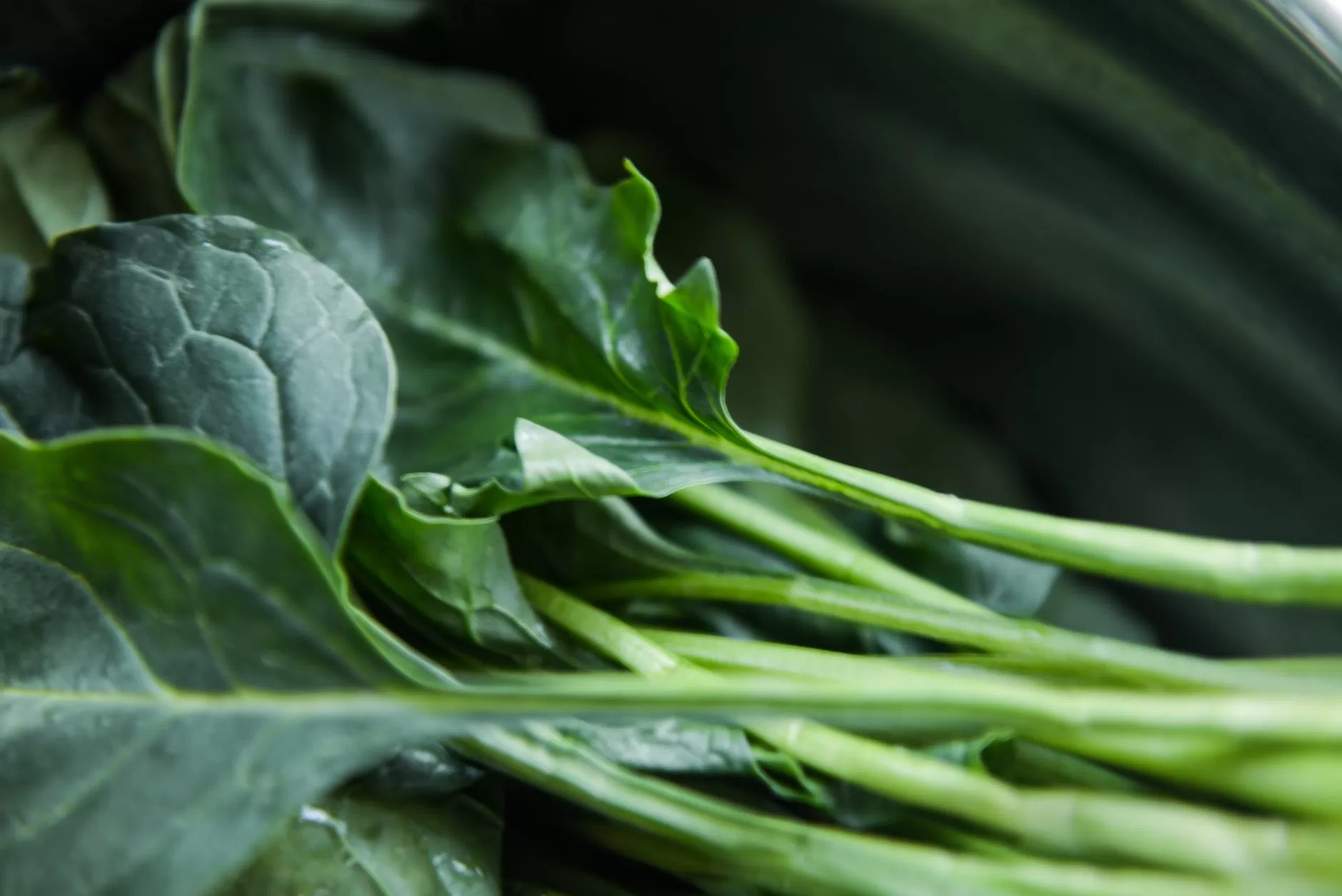
Bioactive Compounds in Whole Food: Polyphenols, Micronutrients and Their Role in Health
Bioactive compounds are naturally occurring chemical substances in plants — often called phytochemicals — that interact with the body’s physiological systems. They include polyphenols, carotenoids, flavonoids, alkaloids and several other families, and traditional systems of medicine have drawn on them for their therapeutic effects for centuries.
Bioactive compounds and micronutrients are related but in different categories. Micronutrients — vitamins and minerals — are essential; the body has a defined requirement for each, and a deficiency produces a recognised condition.
Most bioactive compounds aren’t essential in that sense. There’s no deficiency disease from a lack of polyphenols. What research on both mainstream and traditional systems consistently reports is that they support the body’s physiological processes and appear to work best as part of a whole food, rather than in isolation.
What Are Bioactive Compounds?
A bioactive compound is a naturally occurring chemical that affects living tissue, typically through antioxidant, anti-inflammatory, antimicrobial or antimutagenic activity (Pai et al., 2022). Plants produce a wide range of them, usually concentrated in specific parts — roots, leaves, seeds, skin, or resin — with the exact profile depending on the species and the plant part used.
The main families found across food plants are:
Polyphenols — found in fruits, vegetables and grains, with antioxidant and anti-inflammatory activity.
Carotenoids — the pigments responsible for red, orange and yellow colouring in produce.
Flavonoids — a large polyphenol subgroup found in tea, onions, apples and citrus fruit.
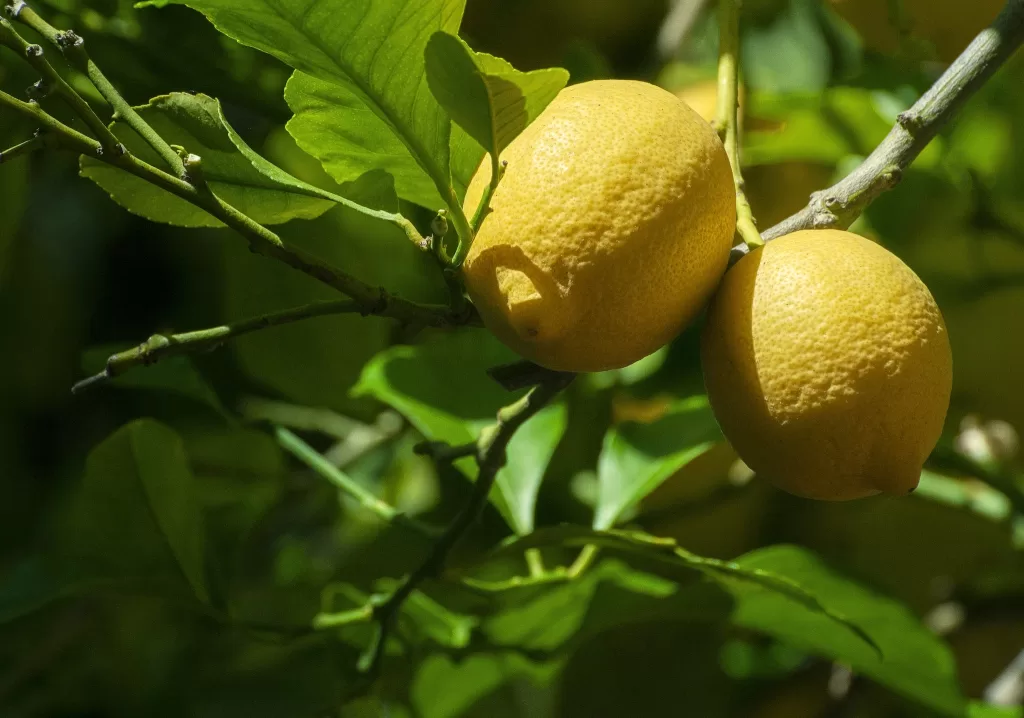
A Reference Table of Food Bioactive Compounds
Here’s a consolidated reference for the main bioactive compound families, what distinguishes each, and where they’re commonly found:
| Compound | Distinguishing property | Common food sources |
|---|---|---|
| Polyphenols | Antioxidant, anti-inflammatory | Fruits, vegetables, tea, common sage |
| Phenolic acids | Antioxidant; includes sinapic and ferulic acid | Fruits, vegetables, grains, bee pollen |
| Flavonoids | Antioxidant, anti-inflammatory (quercetin, catechins) | Apples, onions, green tea, fennel seeds |
| Carotenoids | Pigments; includes beta-carotene, lycopene, lutein | Carrots, courgette, sweet potatoes, kale |
| Saponins | Foaming property; may help lower cholesterol | Mung bean and other legumes, oats, quinoa |
| Terpenoids | Antioxidant, anti-inflammatory (curcumin, limonene) | Turmeric, lemongrass |
| Alkaloids | Nitrogen-containing; central nervous system activity | Coffee, tea (caffeine) |
| Tannins | Astringent; bind to proteins | Tea and other plant sources |
| Glycosides | Contain a sugar molecule; some affect blood pressure and heart rate | Sunflower seeds |
| Phytosterols | Structurally similar to cholesterol; mild steroid-like activity | Sunflower, flax and sesame seeds, olive oil |
Although the effect of plant bioactives on health has been demonstrated in many examples, it seems to correlate more with a diet rich in fruits and vegetables than with any single isolated compound.
Kurek et al., 2022
Natural vs. Synthetic Sources
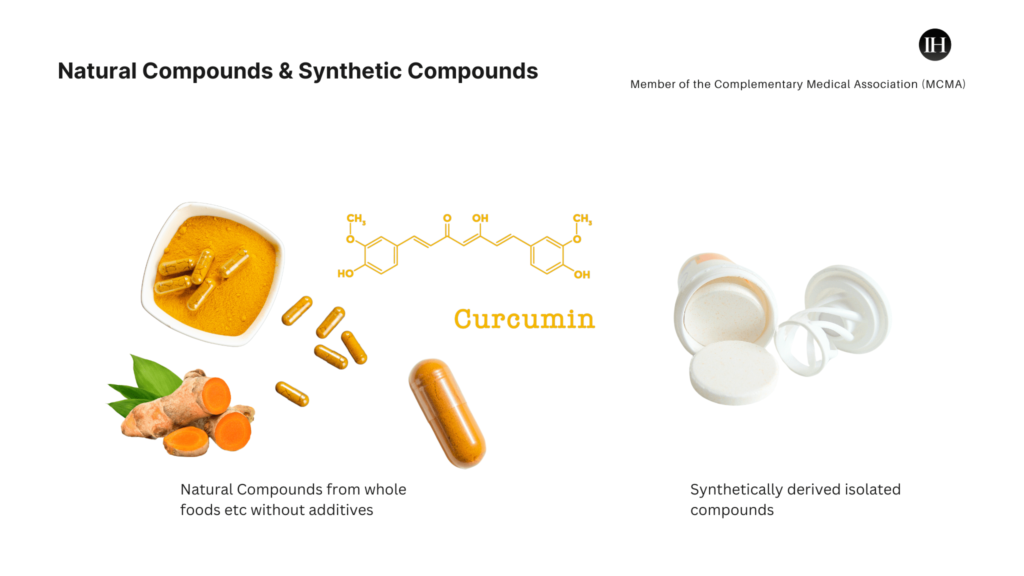
Some bioactive compounds can be synthesised in a lab for use in pharmaceuticals, food additives and cosmetics, and are typically labelled with names resembling their natural counterparts — synthetic vitamin C is labelled ascorbic acid, and synthetic vitamin E is labelled dl-alpha-tocopherol. Whether the synthetic and natural forms are equally beneficial isn’t a settled, one-size-fits-all question: some synthetic forms, like folic acid, are absorbed at least as well as their food-based equivalent, while natural vitamin E (d-alpha-tocopherol) is retained by the body more effectively than the synthetic dl- form.
One clarification worth making: hypervitaminosis — vitamin toxicity from excess intake — isn’t specific to synthetic sources. It applies to any vitamin taken in excess, natural or synthetic, and is far more often a supplement-dosing issue than a food one, particularly for the fat-soluble vitamins (A, D, E, K), which the body stores rather than excretes.
The structural complexity of many plant and animal-derived compounds also makes some genuinely difficult to reproduce synthetically, which is part of why whole natural sources remain the primary route to obtaining them — alongside the fact that whole foods deliver these compounds together with fibre, water and other nutrients that appear to support their absorption.
Bioavailability: How the Body Absorbs Bioactive Compounds
Bioavailability — the extent and rate at which a compound is absorbed and put to use in the body — depends on several factors, broadly grouped as:
Primary factors: cultivation methods, processing, storage, and how the food is cooked — including the utensils used.
Secondary factors: individual metabolism, how the compound moves from the gut into circulation, and how the body excretes what it doesn’t use.
Once absorbed, compounds are carried by the circulatory system to organs, tissues and cells (InformedHealth.org, 2010) — so the quality of what’s consumed has a direct bearing on what actually reaches the body’s tissues.
Cooking method matters here too. High-heat preparation can degrade or deplete some phytochemicals and, in some cases, generate compounds of concern — acrylamide and heterocyclic amines forming during high-temperature cooking are well-documented examples in food chemistry research, distinct from the culinary discipline of molecular gastronomy, which focuses on the physical and chemical processes behind cooking technique rather than nutrient degradation specifically.
Natural Sources vs. Supplements
A useful distinction: consuming a whole food containing a given compound isn’t necessarily equivalent to taking that compound in isolated, supplement form. Kurek et al. (2022) note that plants rich in lycopene are associated with reduced cardiovascular disease and prostate cancer risk, while isolated lycopene supplementation shows a far weaker effect — a pattern that recurs across several bioactive compounds and is thought to relate to the “food matrix effect,” where a compound’s activity depends partly on the other nutrients and fibre surrounding it in the whole food.
A well-balanced diet built around whole bioactive-rich foods is a reasonable foundation for most healthy adults; supplementation is better approached with professional guidance, both to confirm it’s suitable and to get the dose and form right.
A Note on Additives and Sweeteners
Not every substance ingested through food is a bioactive compound in the beneficial sense described above — synthetic additives are a useful contrast. Artificial sweeteners, for instance, are chemically distinct from anything occurring naturally, and research on their health effects is still developing and, on some questions, contested.
Aspartame is a case in point. Major regulators — the FDA, EFSA and WHO/FAO’s joint expert committee — have each concluded aspartame is safe within its established daily intake limit, based on extensive review. Separately, animal research on methanol, one of aspartame’s metabolic breakdown products, has observed developmental effects at cumulative exposure levels far above what typical dietary aspartame intake would produce; this doesn’t establish a comparable risk at ordinary human exposure, but it’s part of why intake limits exist and why regulators continue to review new evidence rather than treating the question as permanently closed.
On additives generally: research has associated some food additives with adverse outcomes — including during pregnancy and breastfeeding, where certain artificial sweeteners have been detected transferring into breast milk (Stampe et al., 2022) — though association isn’t the same as established cause, and the picture varies significantly by additive type. Pregnant or breastfeeding women, and parents making choices for children, may reasonably want to factor this uncertainty into their decisions and seek personalised guidance rather than a blanket rule.
Fruits, Vegetables and Other Whole-Food Sources
Bioactive compounds in fruits and vegetables are responsible for much of their characteristic colour, flavour and fragrance, alongside vitamin and mineral content:
- Orange and dark green vegetables — carrots, sweet potatoes, kale, spinach — are rich in carotenoids.
- Colourful vegetables like broccoli, peppers and courgette provide flavonoids; cruciferous vegetables (broccoli, cauliflower, cabbage) contain sulforaphane.
- Red and purple produce — grapes, cherries, aubergine, red onion, beetroot — contains resveratrol; blueberries and purple cabbage are high in anthocyanins.
- Vitamin content varies by type: winter squash and sweet potatoes are high in vitamin A; broccoli and peppers in vitamin C; spinach, kale and collard greens in vitamin K; asparagus and avocado in vitamin E; carrots and turnips in vitamin B6.
Legumes such as lentils and beans add fibre, protein, micronutrients and minerals; nuts and seeds — almonds, walnuts, chia, flaxseed — contribute healthy fats and bioactive compounds linked to lower cholesterol and cardiac support.
Honey is worth a specific note, since it’s often described in wellness content as unconditionally diabetes-safe — that’s an oversimplification. Honey raises blood glucose in much the same way as other sugars and should be treated with comparable moderation. That said, more recent, targeted research complicates the picture: a small three-month human trial in people with type 2 diabetic neuropathy found that honey, taken alongside their existing anti-diabetic treatment, was associated with reduced fasting glucose, improved lipid profile, lower oxidative stress markers and better cardiovascular autonomic function (Sirisha et al., 2025). In vivo research in a type 1 diabetes model found comparable glucose-lowering and protective effects to metformin (used as the positive control). Both are limited, specific studies rather than a green light for unrestricted intake — honey is a natural sugar that needs the same care as any other, with early, structured evidence that supervised, moderate supplementation may have a role in some contexts.
Honey’s contrast with refined table sugar illustrates a related but distinct point: unlike a fully stripped sugar source, honey retains trace amounts of natural bioactive compounds — small quantities of polyphenols and enzymes — that table sugar has none of. That’s not the food-matrix effect described above; it’s a simpler difference in what a less-processed sugar source still carries with it, within the limits of how much any of these trace compounds meaningfully affect health at typical intake.
Choosing Organic vs. Conventionally Grown Sources
Organic farming avoids synthetic pesticides and fertilisers, and generally means lower pesticide residue exposure — that part is well established. Organic farming’s soil-health and biodiversity benefits are separate, environmental considerations worth weighing on their own terms.
Bioactive Compounds in Ayurveda
An estimated 88% of countries report some use of traditional medicine — herbal medicine, acupuncture, yoga, and indigenous therapies among them (WHO Global Centre for Traditional Medicine). Ayurveda treats diet as a central pillar of health, with a wide body of traditional knowledge on foods and their effects. A balance of foods suited to vata, pitta and kapha — the constitutional bioelements — is considered the foundation of dietary wellness, with the specific balance shaped by a person’s predominant dosha.
Bioactive compounds from natural foods and food combinations are a first-principles approach, fundamental to Ayurvedic dietary combinations in growth and recovery.
Summary
Bioactive compounds are a genuinely broad category — polyphenols, carotenoids, flavonoids and several other families — distinct from the essential micronutrients (vitamins and minerals) they’re often discussed alongside. The strongest and most consistent research support sits with whole-food patterns rich in fruits, vegetables, legumes, nuts and seeds, rather than with any single isolated compound or supplement. Both mainstream nutrition science and traditional systems such as Ayurveda converge on this same whole-food emphasis, arrived at through different methods and over very different timescales.
Suitability and Precautions
The information presented in this guide is subject to individual suitability and individual health status. This is an informational post only and does not constitute professional or medical advice.
Frequently Asked Questions
No. Micronutrients (vitamins and minerals) are essential — the body needs a defined amount and deficiency causes a recognised condition. Most bioactive compounds, such as polyphenols, aren’t essential in that sense, though research links them to a range of physiological benefits.
Polyphenols are a large family of plant bioactive compounds with antioxidant and anti-inflammatory properties, found widely in fruits, vegetables, tea and grains. Flavonoids and phenolic acids are among the main polyphenol subgroups.
Not necessarily. Research on lycopene, for example, shows a stronger association with disease risk reduction from whole-food sources than from isolated supplementation — a pattern attributed to the “food matrix effect,” where a compound’s activity depends partly on the surrounding nutrients and fibre in the whole food.
Some targeted research on structured, moderate honey supplementation alongside standard diabetes treatment has shown favourable metabolic effects, but the evidence is limited and early-stage. Seek the advice of a professional.
References
- Pai, S., Hebbar, A., & Selvaraj, S. (2022). A critical look at challenges and future scopes of bioactive compounds and their incorporations in the food, energy, and pharmaceutical sector. Environmental Science and Pollution Research International, 29(24), 35518–35541.
- Kurek, M., Benaida-Debbache, N., Garofulić, I. E., Galić, K., Avallone, S., Voilley, A., & Waché, Y. (2022). Antioxidants and Bioactive Compounds in Food: Critical Review of Issues and Prospects. Antioxidants, 11(4).
- Sorrenti, V., Burò, I., Consoli, V., & Vanella, L. (2023). Recent Advances in Health Benefits of Bioactive Compounds from Food Wastes and By-Products: Biochemical Aspects. International Journal of Molecular Sciences, 24(3).
- Samy, R. P., Pushparaj, P. N., & Gopalakrishnakone, P. (2008). A compilation of Bioactive Compounds from Ayurveda. Bioinformation, 3(3), 100–110.
- Tristan Asensi, M., Napoletano, A., Sofi, F., & Dinu, M. (2023). Low-Grade Inflammation and Ultra-Processed Foods Consumption: A Review. Nutrients, 15(6), 1546.
- Stampe, S., Leth-Møller, M., Greibe, E., Hoffmann-Lücke, E., Pedersen, M., & Ovesen, P. (2022). Artificial Sweeteners in Breast Milk: A Clinical Investigation with a Kinetic Perspective. Nutrients, 14(13), 2635.
- Sirisha, A., Gaur, G. S., Pal, P., Shamanna, S. B., Bobby, Z., & Pal, G. K. (2025). Effect of Three Months of Honey Supplementation on Heart Rate Variability and Baroreflex Sensitivity in Type 2 Diabetic Neuropathy Patients. Cureus, 17(7), e88434.
- Potential of honey against the onset of autoimmune diabetes and its associated nephropathy, pancreatitis, and retinopathy in a type 1 diabetic animal model. PMCID: PMC8989157.
- Lee, S. J., Bae, J., Kim, S., et al. (2013). Saponins from soy bean and mung bean inhibit the antigen specific activation of helper T cells by blocking cell cycle progression. Biotechnology Letters, 35(2), 165–173.
- Fei, Y., Zhao, J., Liu, Y., et al. (2015). New monoterpene glycosides from sunflower seeds and their protective effects against H₂O₂-induced myocardial cell injury. Food Chemistry, 187, 385–390.
- Cardenas, D. (2013). Let not thy food be confused with thy medicine: The Hippocratic misquotation. e-SPEN Journal, 8(6), e260–e262.
- WHO Global Centre for Traditional Medicine: https://www.who.int/initiatives/who-global-centre-for-traditional-medicine
- InformedHealth.org [Internet]. Cologne, Germany: IQWiG; 2006-. How does the blood circulatory system work? [Updated 2023].