Mung Bean (Vigna Radiata L.): Nutrition, Digestibility and Uses
Mung bean (Vigna radiata L.) is a small, olive-green legume of the Fabaceae family, known across South Asia as green gram, moong, or mung dal. It has been a staple of Ayurvedic and Chinese dietary sciences for centuries and, more recently, a subject of interest in modern nutrition research for its digestibility, protein, micronutrient density, polyphenol profile and as an excellent source of dietary fibre.
What distinguishes mung bean from many other legumes is not one property but several working together: an easily digested protein, a nutrient profile that changes measurably during germination, a documented history in two independent traditional medicine systems, and a dense supply of magnesium, folate, iron and potassium. This article looks at each in turn, with the underlying research cited where available.
What Is Mung Bean? (Vigna Radiata L.)
Mung bean is one of the more widely grown edible legumes worldwide, cultivated on more than 6 million hectares globally — around 8.5% of the world’s total pulse-growing area. It is concentrated mainly in China, India, Bangladesh and Pakistan, with further cultivation across Southeast Asia, southern Europe, and the warmer, drier regions of Canada and the United States (Hou et al., 2019). A relatively drought-tolerant crop with a short growing cycle of around 70 days, it has been part of cereal-based diets in India and China for centuries.
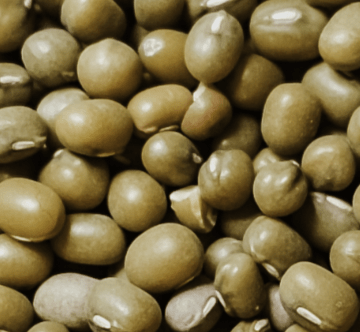
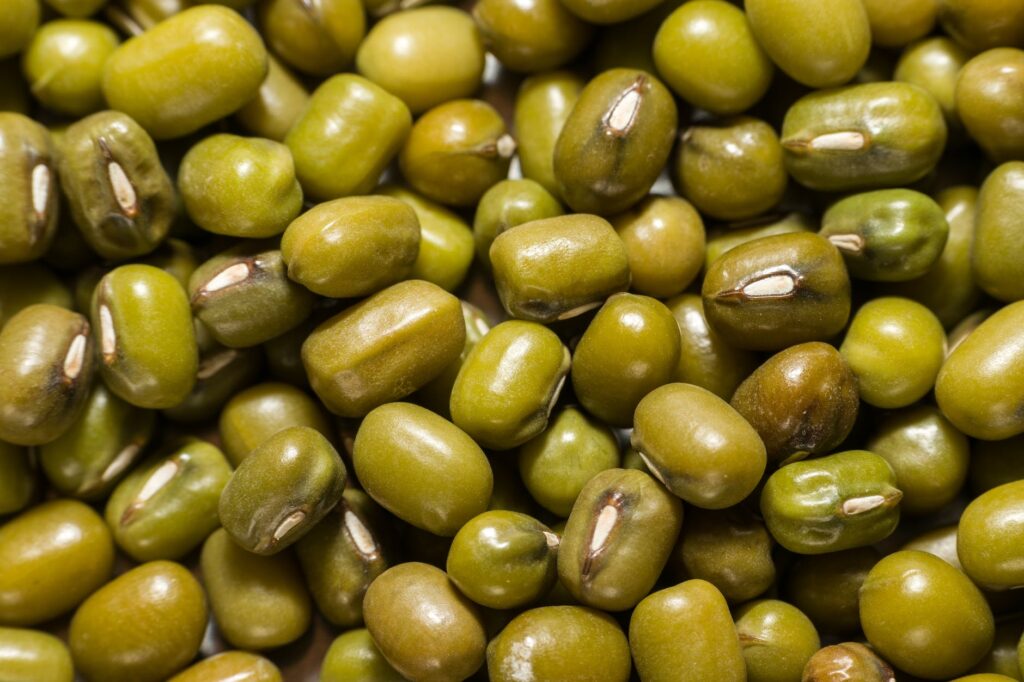
Mung bean is sold and prepared in three main forms: whole (with the green seed coat intact) — commonly called mung dal, split mung bean — and sprouted. The whole bean has a smooth, light green to olive skin surrounding a pale yellow interior; once split or sprouted, the interior colour becomes more visible.
| Also Known As |
|---|
| Mung Lentil · Golden Gram · Green Gram · Moongi · Mung Dal · Mungi |
Mung Bean Nutrition: Protein, Minerals and Vitamins
The figures below are USDA values for 1 cup (207g) of raw, dried mung beans — the form the bean is sold and weighed in before cooking. This is worth noting because a cup of cooked mung beans contains roughly a third of this protein figure once water has been absorbed during cooking; the dry-weight numbers are the standard reference point but aren’t what ends up on a plate.
Per 1 Cup (207g), Raw/Dried: 49.5g Protein, 2.38g Fat, Approx
- Protein: 49.5g
- Energy: 3000 kJ (718 kcal)
- Fat: 2.38g
- Carbohydrates: 103g
- Dietary fibre: 33.7g
- Sugars: 13.7g
| Calcium 273 mg | Iron 14 mg |
| Magnesium 391 mg | Phosphorous 760 mg |
| Potassium 2590 mg | Sodium 31 mg |
| Zinc 5.55 mg | Copper 1.95 mg |
| Manganese 2.15 mg | Selenium 17 µg |
| Vitamin C 9.94 mg | Thiamin 1.28 mg |
| Riboflavin 0.482 mg | Niacin 4.66 mg |
| Pantothenic acid 3.95 mg | Vitamin B-6 0.791 mg |
| Folate 1290 µg | Choline 203 mg |
| Vitamin A 12.4 µg | Vitamin E 1.06 mg |
| Vitamin K 18.6 µg | Beta carotene 141 µg |
Two figures stand out. Folate is exceptionally high — a single cup of dried mung beans provides well over the daily requirement for most adults. Magnesium is also notable at 391mg per cup, a mineral involved in over 300 enzymatic reactions, including ATP production, and in bone mineralisation, blood pressure regulation and normal muscle function.
A controlled trial in recreational runners gives a useful, real-world sense of magnesium’s role: participants who took 500mg of magnesium per day for 7 days before a 10km downhill run showed lower post-exercise IL-6 (an inflammatory marker), improved blood glucose recovery, and reduced perceived muscle soreness compared with a placebo group (Steward et al., 2019). This is a supplementation study, not a food-equivalence one — it doesn’t establish that eating mung beans produces the same effect — but it more broadly illustrates why adequate real, whole-food dietary magnesium, from sources such as mung beans, is relevant to recovery physiology.
Why Mung Bean Protein Is Easier to Digest
Mung bean protein is more easily digested than protein from many other legumes and produces less flatulence, which is one reason it is well tolerated by children and commonly used in weaning foods across South Asia (Hou et al., 2019).
In particular, due to lower levels of anti-nutrients, a high release of free amino acids during breakdown, and a softer structural composition. Mung bean protein has exhibited a significant release of free amino acids. (Feng et al., 2025). Making it very nutritious because its structure lets enzymes to break it down easily into smaller, useful parts
This also explains a very old pairing: mung bean and rice, eaten together as dal-rice or khichdi. Cereals like rice are rich in sulfur-containing amino acids but low in lysine; legumes like mung bean supply the reverse.
Combining the two measurably improves the overall amino acid profile — a 3:4 ratio of mung bean protein to rice protein has been shown to produce the highest chemical amino acid score of the combinations tested (Hou et al., 2019). The traditional pairing and the amino acid chemistry point to the same conclusion independently.
Bioactive Compounds: Polyphenols, Peptides and Polysaccharides
Beyond being a good source of plant-based protein, macronutrients, and minerals, mung beans contain meaningful amounts of polyphenols, bioactive peptides, and polysaccharides, each associated with different physiological effects in laboratory and in vivo research (Hou et al., 2019).
| Polyphenolics | Peptides | Polysaccharides |
| Phenolic acids, flavonoids and tannins; vitexin and isovitexin are the major flavonoids | Released on digestion; associated with ACE-inhibitory (blood pressure-related) activity | Associated with antioxidant and immunoregulatory activity |
Phenolic acids in mung bean occur in both free and “bound” forms — ferulic, caffeic, chlorogenic, syringic, p-coumaric and gentisic acids among them. Bound phenolics are considered to have a greater effect on health outcomes than free ones, because they largely bypass upper digestion and are absorbed further along the digestive tract through fermentation by gut microbiota (Hou et al., 2019).
Vitexin, one of mung bean’s two major flavonoids, has shown antioxidant and neuroprotective activity in vivo and cell-based research — including reduced oxidative damage in models of cerebral ischaemia and neurotoxicity (Babaei et al., 2020). It’s worth being precise about what this does and doesn’t show: these are laboratory and in vivo studies using isolated, often concentrated doses of vitexin, not clinical trials in humans eating mung beans. They establish biological plausibility rather than a proven dietary effect.
Sprouting Mung Bean: How Germination Changes Its Nutrient Profile
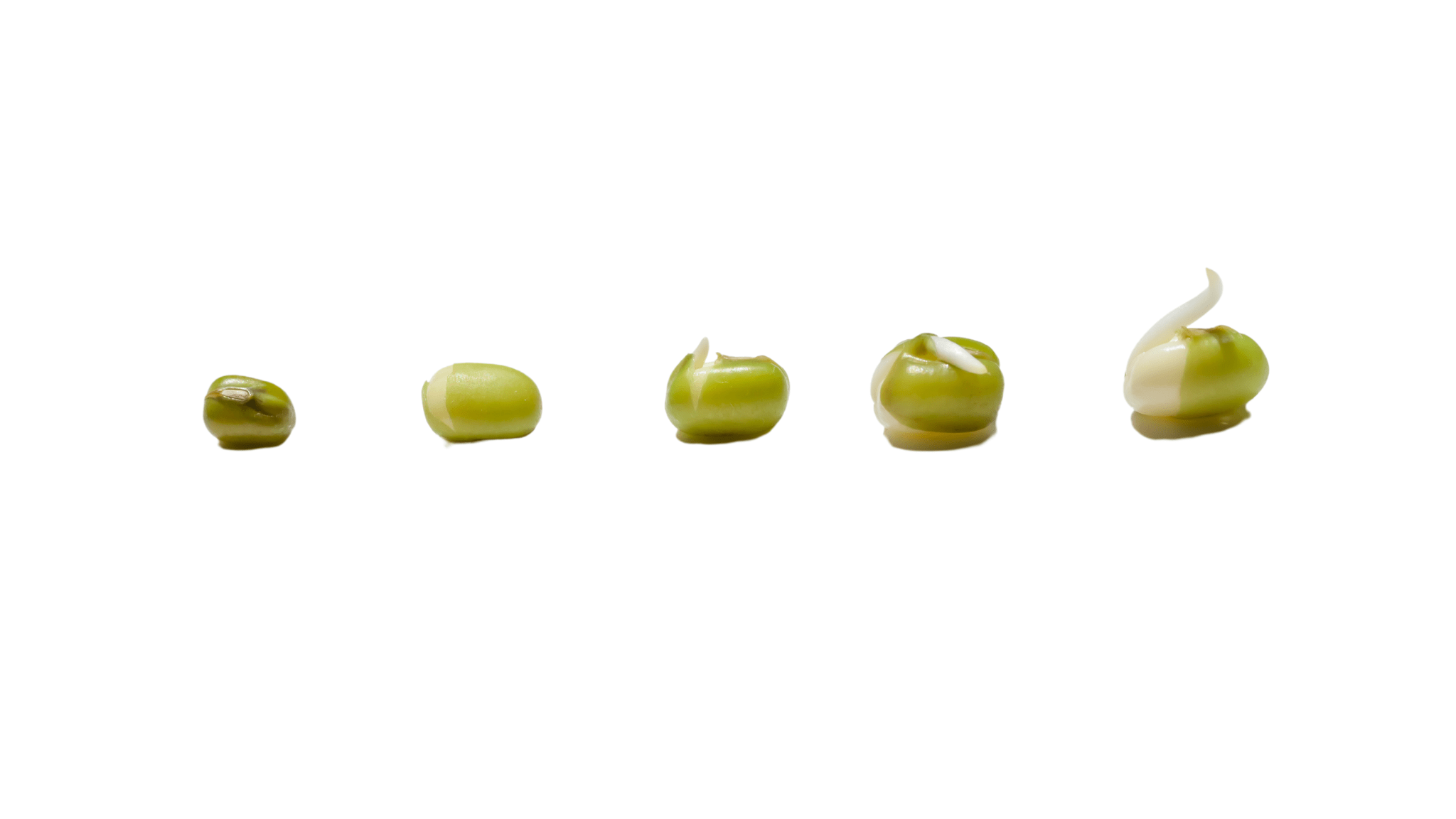
Germination doesn’t just soften the bean and produce a shoot — it measurably changes what’s inside it. Sprouted mung beans show significantly higher levels of phenolic acids and flavonoids, including vitexin and isovitexin, at up to 4.5 and 6.8 times the levels found in raw seeds respectively (Hou et al., 2019).
Sprouting also affects mineral availability. Germination reduces phytic acid content by around 76%; phytic acid binds to minerals such as zinc, iron, calcium and magnesium and limits their absorption, so this reduction is directly relevant to nutrition. In the same research, the bioavailability of zinc and iron increased roughly threefold and 2.4-fold respectively after germination compared with raw beans (Hou et al., 2019).
How to Sprout Mung Bean at Home
- Rinse the beans, then soak in clean water overnight.
- Drain and place in a bowl, jar or cloth, covered but with airflow.
- Keep in a dark or shaded spot and rinse with fresh water twice a day.
- Sprouts typically appear within 2–3 days and are ready to eat raw or lightly cooked.
Traditional Uses in Ayurveda and Traditional Chinese Medicine
Mung bean appears independently in two of the world’s oldest documented medicine systems, which is unusual for a single food crop. In China, the Compendium of Materia Medica (“Bencao Gangmu”) records its use for detoxification, mental clarity, alleviating heat stroke, and settling gastrointestinal upset (Hou et al., 2019). Contemporary research on the mung bean’s hypoglycaemic, hypolipidaemic, antihypertensive, hepatoprotective and immunomodulatory properties gives some of these traditional uses a plausible modern mechanism, even though the historical texts and the laboratory studies were arrived at independently and centuries apart.
The mung bean has been documented to ameliorate hyperglycemia, hyperlipemia, and hypertension, and prevent cancer and melanogenesis, as well as possess hepatoprotective and immunomodulatory activities.
Hou and others 2019
Ayurvedic Perspective: Green Gram and the Doshas
In Ayurveda, mung bean (green gram) is classified as light, cooling, and easy to digest—commonly recommended as a daily food due to its inherent plant-based macro- and micronutrient profile, often combined with rice, and traditionally used as a gentle, easily tolerated source of nutrition during recovery from illness. Ayurvedic principles classify foods by their effect on the body’s constitution, or doshas, rather than by chemical composition:
| Pacifies Pitta (Fire) | Pacifies Kapha (Earth) |
|---|---|
| Traditionally associated with inflammation, excess body heat | Traditionally associated with heaviness, lethargy, low energy |
Choosing and Preparing Mung Bean
A few preparation habits, most of them drawn from long-standing Ayurvedic practice, are also borne out by the research on phytic acid and mineral bioavailability above:
- Soak the beans overnight in clean water before cooking, then rinse — this reduces phytic acid and lectins on the outer shell.
- Cook until fully softened; extended cooking further reduces phytic acid content.
- Sprouting, as covered above, increases mineral bioavailability and bioactive compound content beyond what soaking or cooking alone achieve.
On organic versus conventionally grown beans: certified organic mung beans are grown without synthetic pesticides or fertilisers, which is a meaningful distinction for anyone specifically wanting to avoid those inputs — organic certification is a farming-method choice, a nutritional choice.
Ways to Prepare and Eat Mung Bean
Mung bean is versatile in the kitchen: whole or split, pre-soaked, simmered into a soup or dal, ground into a paste, or eaten sprouted, raw or lightly cooked. A few traditional preparations:
Mung Dal Soup
A simmered soup made with split or whole mung dal and spices such as black pepper, turmeric and ginger — a staple preparation in Ayurvedic cooking. Mung beans provide around 347 kcal per 100g in their raw, dried form (USDA FoodData Central).
Coconut Mung Bean Porridge
Mung beans cooked with shredded coconut, oats or another grain, and water or a plant milk. Finished with a spoonful of coconut oil once cooked.
Mung Bean Khichdi
Mung dal, rice and vegetables cooked together — a traditional combination that also happens to complement each ingredient’s amino acid profile, as covered above. See our full guide to Ayurvedic khichdi for a more comprehensive overview.
Precautions and General Suitability
Mung bean is a well-tolerated legume for most people, but individual suitability varies. Anyone pregnant, managing a chronic health condition, or with a known legume allergy should check with a healthcare professional before making it a regular part of their diet.
This is an informational post only and does not constitute professional advice.
✔ Go Deeper Health is a Registered Member of the Complementary Medical Association (CMA) and an Awards Nominee.
Frequently Asked Questions
Mung bean is a good source of plant protein but is not considered a complete protein on its own. Pairing it with a grain such as rice — a traditional combination in dishes like khichdi and dal-rice — improves the overall amino acid profile, since legumes and cereals tend to be lysine- and sulfur-amino-acid-deficient in opposite directions.
Research indicates mung bean protein is more easily digested than protein from other beans and produces less flatulence, which is part of why it’s commonly used in weaning foods in holistic diets.
Germination significantly raises levels of phenolic acids and flavonoids such as vitexin and isovitexin, reduces phytic acid by around 76%, and increases the bioavailability of minerals including zinc and iron compared with the raw, non sprouted bean. However, the Ayurvedic view differs somewhat on sprout or mature seed, as mature seed is seen as richer nutritionally.
Organic certification means the bean was grown without synthetic pesticides or fertilisers, which matters to some people on food quality and farming-method grounds.
Soaking overnight in clean water is standard practice in Ayurvedic preparation and is supported by research showing it reduces phytic acid and lectins on the outer shell, improving mineral bioavailability. Soaking overnight in plain water is a common practice.
References
- Hou, D., Yousaf, L., Xue, Y., Hu, J., Wu, J., Hu, X., Feng, N., & Shen, Q. (2019). Mung Bean (Vigna radiata L.): Bioactive Polyphenols, Polysaccharides, Peptides, and Health Benefits. Nutrients, 11(6), 1238. https://doi.org/10.3390/nu11061238
- Feng, Q., Lin, J., Ran, H., Yao, Y., Zhao, F., Sun, Y., Zhong, F., Zhou, S., & Hou, D. (2025). Deciphering the gastrointestinal fate of four heat-treated legume proteins: Focus on digestive characteristics and peptide profiles. International Journal of Biological Macromolecules, 319, 145522. https://doi.org/10.1016/j.ijbiomac.2025.145522
- Steward, C. J., Zhou, Y., Keane, G., Cook, M. D., Liu, Y., & Cullen, T. (2019). One week of magnesium supplementation lowers IL-6, muscle soreness and increases post-exercise blood glucose in response to downhill running. European Journal of Applied Physiology, 119(11-12), 2617–2627. https://doi.org/10.1007/s00421-019-04238-y
- Babaei, F., Moafizad, A., Darvishvand, Z., Mirzababaei, M., & Hosseinzadeh, H. (2020). Review of the effects of vitexin in oxidative stress-related diseases. Food Science & Nutrition, 8(6), 2569–2580. https://doi.org/10.1002/fsn3.1567
- USDA FoodData Central — Mung beans, mature seeds, raw (FDC ID 174256)