
Pumpkin Seed Nutrition: How to Eat Pumpkin Seeds for Best Bioavailability
Pumpkin seed nutrition is a dense source of nutrients, but how you eat pumpkin seeds — raw, roasted, sprouted or as oil — genuinely changes what you get from them. This article examines the seed’s nutritional profile, the bioactive compounds behind its therapeutic recognition, and the available research on preparation methods and what’s actually tested for bioavailability.
Specifically, green oilseed pumpkin (pepita) is the focus — a hulless variety prized for its nutrient density and the form on which most nutritional recognition is based.
What Are Pumpkin Seeds (Pepitas)?
Pumpkin seeds, or pepitas, are the edible seeds of the pumpkin plant — a member of the Cucurbitaceae family alongside squash. According to sources, pumpkins originated in the Americas, with cultivation in Mexico and Central America dating back thousands of years; consumption later spread and was adopted across other regions, including parts of Asia. An example of its relative is Ghia “Kaddu” (also known as lauki or bottle gourd, scientifically called Lagenaria siceraria), which is native to Africa and Asia and is also prized for its exceptional nutrient value.
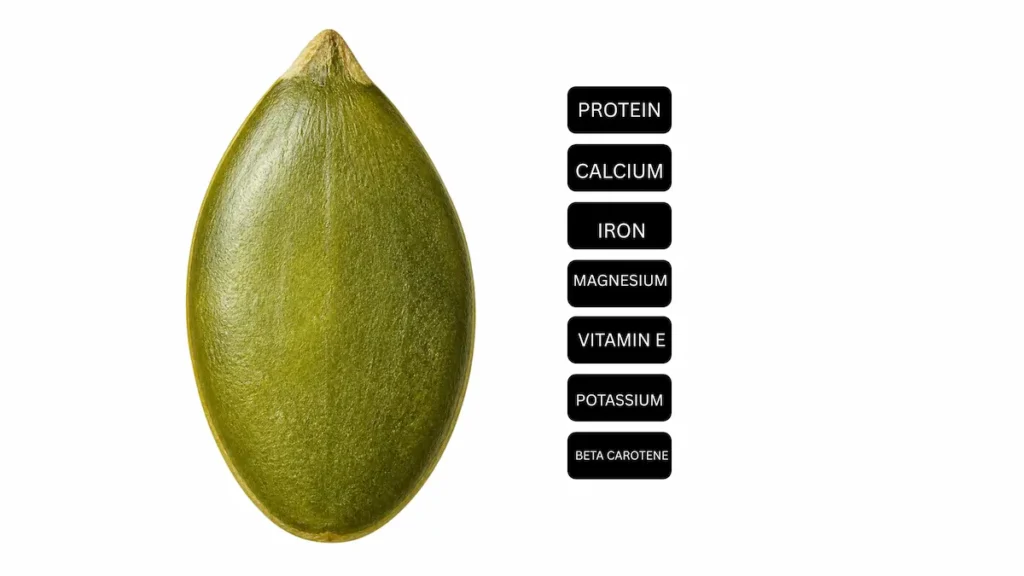
The oilseed, or Styrian, pumpkin (Cucurbita pepo) is a hulless variety with a distinctive light green, smooth, thin-skinned seed and a shiny surface from its high oil content. It’s eaten raw or roasted as a snack, and sometimes ground into a fine powder for use as a protein supplement. Shell colour can vary somewhat by region and cultivar, from dark to light green.
Pumpkin seed protein is an important plant-based protein source and, when combined with other plant-based sources, can create a complete protein. Pumpkin seeds are also a good source of protein with a favourable essential amino acid profile (Hussain et al., 2023) — lysine is the main limiting amino acid, so pairing pumpkin seeds with legumes or grains rounds out the amino acid profile.
Pumpkin seed is high in crude protein, roughly 35%, and this translates to a significant and different amount of amino acids (Dotto & Chacha, 2020).
Nutrient-dense, providing a variety of essential micronutrients critical for overall health and anemia prevention. Key nutrients include iron, zinc, magnesium, potassium, selenium, and phosphorus, each playing a distinct role in supporting physiologic functions.Pumpkin seeds possess a range of therapeutic properties that promote health and aid in managing various disease conditions.
Summarised from (Kumari et al., 2025)
Pumpkin is also a genuinely hardy crop — drought-tolerant and able to grow on marginal land, which makes it a resource-efficient option in water-scarce farming regions: it is a comparatively resilient, low-input plant to grow.
Pumpkin Seed Nutrition: What’s in 100 Grams
Based on current figures, the following are for dried pumpkin and squash seed kernels (unsalted), per 100 grams — the reference point most other preparation methods are compared against:
- Energy: 559 kcal
- Protein: 30.2g
- Calcium: 46mg
- Iron: 8.82mg
- Magnesium: 592mg
- Phosphorus: 1233mg
- Potassium: 809mg
- Vitamin E (alpha-tocopherol): 2.18mg
- Gamma-tocopherol: 35.1mg
Source: USDA FoodData Central, “Seeds, pumpkin and squash seed kernels, dried” (FDC 170556).
Two labelling notes worth being precise about: alpha-tocopherol and gamma-tocopherol are measured and reported separately — the 2.18mg and 35.1mg figures aren’t additive, they’re two different forms of vitamin E activity. And these values are for the dried kernel specifically; roasted or salted preparations carry different figures.
Bioactive Compounds and Therapeutic Properties
Beyond their macro- and micronutrient content, pumpkin seeds are a source of several bioactive compounds — as with most whole foods, they’re used within a food matrix, combined with other ingredients to suit individual needs, rather than as isolated compounds.
Pumpkin seed’s antioxidant content — including vitamin E and carotenoids — is central to several of the therapeutic associations reported in the literature (Batool et al., 2022):
- Liver supportive: associated with supporting liver function and reducing inflammation.
- Antihypertensive: a dietary source of magnesium and nitrates, both relevant to blood pressure regulation.
- Anti-carcinogenic potential: attributed to its carotenoid, vitamin E, lignan, phytosterol and cucurbitacin content.
- Anti-inflammatory: a dietary source of compounds with anti-inflammatory activity.
- Metabolically supportive: a low-glycemic-index food; trigonelline content has been studied for a possible role in glucose metabolism (more on the strength of this evidence below).
- Antioxidative: a dietary source of antioxidant compounds.
On the carotenoids specifically: pumpkin seed contains beta-carotene, which the body converts to vitamin A. It also contributes lutein — though only in small amounts, since pumpkin seed isn’t a major dietary source of it. Lutein and zeaxanthin together, at meaningful doses (12mg/day in one randomised trial of older adults), were associated with measurable improvements in complex attention and cognitive flexibility over one year (Hammond et al., 2017) — a genuinely interesting finding, but one based on concentrated supplementation, not the trace amounts a serving of pumpkin seed would provide. Worth knowing the effect is real; worth being clear that pumpkin seed alone isn’t the vehicle that this specific trial tested. Yet cumulative advantages, where pumpkin seed is a frequent part of a balanced diet, were not examined in terms of lutein and zeaxanthin obtained.
Pumpkin Seeds, Iron and Anemia
At 8.82mg of iron per 100g, pumpkin seed is a genuinely notable plant source of iron. A 2025 review compiling the nutritional case for pumpkin seed in anemia prevention highlights this, alongside its zinc and magnesium content, as relevant to hematopoiesis — red blood cell production (Kumari et al., 2025). It’s worth being precise about what this does and doesn’t establish: the review is explicit that it’s compiling mechanistic and compositional evidence and identifying research gaps, not reporting a clinical trial that proves pumpkin seed treats anemia in humans.
One practical, well-established point the same research touches on: pumpkin seed provides nonheme iron, the plant-based form, which the body absorbs less efficiently than the heme iron found in animal sources. Pairing nonheme iron sources with vitamin C measurably improves absorption — a genuinely useful, low-effort combination if iron intake is a priority (a squeeze of lemon over roasted pumpkin seeds, or eating them alongside vitamin C-rich vegetables, applies this directly) to a certain extent.
Omega Fatty Acids: What Pumpkin Seeds Actually Provide
Pumpkin seed fatty acid profile is dominated by linoleic acid (omega-6), along with oleic and palmitic acid, with only trace omega-3 content (Dotto & Chacha, 2020). A comparative review of edible seeds places pumpkin seed’s strength elsewhere — its mineral density and immune-relevant nutrient profile — distinct from seeds like chia and flax, which are the genuine omega-3 sources in that comparison (Raza et al., 2026).
Worth noting on the compound side too: pumpkin seed’s phenolic compounds — including ferulic and caffeic acid — have real antioxidant activity in isolation, but their bioavailability in the body is limited, since phenolics are prone to being broken down or bound into less-active complexes during digestion (Dotto & Chacha, 2020). This is a useful reminder that a compound’s presence in a food and its measurable effect once digested aren’t automatically the same thing.
Below, we examine two out of the vast number of case studies available on the nutritional effects of pumpkin seeds, known as the therapeutic efficacy of a food source:
Two Case Studies: Cognition and Immune Function
Brain and Cognitive Health
Batool et al. (2022) report that pumpkin seed’s essential fatty acids, minerals and vitamins are relevant to brain function, and that its phytosterol, tocopherols, and carotenoid content has antioxidant and anti-inflammatory properties that, taken together, are thought to act synergistically on digestion. The reasonable takeaway is that pumpkin seed is a plausible, nutrient-dense addition to a broader preventive diet aimed at protecting cognitive health over time — not a food shown to reverse or treat cognitive decline on its own. Dietary approaches to brain health work over the long term and fit best within a personalised plan.
Immune Function and Its Link to Cognitive Health
Hussain et al. (2023) report that pumpkin seed’s phytosterol content has been found to support immune cell activity in the available research. Separately, a large observational study of older Americans found that better immune functioning and lower inflammation were associated with better cognitive status over time (Farina et al., 2022). That study didn’t test pumpkin seed or any specific food — it establishes an association between immune health and cognition generally, in a design that can’t confirm cause and effect. Put together, the two findings support a reasonable, appropriately hedged idea — that supporting immune function through diet may be one relevant piece of supporting cognitive health.
On the metabolic side: pumpkin seed’s trigonelline, nicotinic acid and D-chiro-inositol content has been studied for a possible role in glucose metabolism (Adams et al., 2014). This is preliminary evidence, drawn mainly from preclinical and mechanistic research rather than large human trials — a genuinely interesting research direction.
How to Eat Pumpkin Seeds: Best Methods
How pumpkin seed is prepared genuinely affects what you get from it — bioavailability, digestive uptake, and how well its compounds work together (a whole-food matrix effect, where the combination of nutrients has a greater effect than any single compound consumed alone). Pumpkin seed’s phytic acid and lectin content is worth a brief note here too: its lectin content is comparatively low next to other beans and seeds, so this is a smaller consideration for pumpkin seed than it is for, say, legumes.
Batool et al. (2022) note pumpkin seed can be eaten raw, sprouted, roasted, or as oil. Raw and roasted are generally considered the most beneficial forms — extended, excessive heat processing can reduce some bioactive compounds — though as the roasting research below shows, the relationship between heat and nutritional quality is more specific than “less heat is always better.”
1. Raw or Dried
- Rinse raw pumpkin seeds thoroughly under cold water to remove any pulp or debris.
- Spread in a single layer on a baking sheet and air-dry for a few hours or overnight.
- Once dried, eat as a snack alone or mixed with nuts and dried fruit, or add to other foods.
- Alternatively, use an organic, ready-dried packaged source, or eat them raw (undried).
2. Roasting
Research on roasting pumpkin seed at 120°C, 160°C and 200°C found antioxidant activity, phenolic content and overall antioxidant capacity all increased as roasting temperature rose (Peng et al., 2021). But that’s not the whole picture: protein quality was actually best at 160°C, with degradation products from the Maillard reaction and lipid peroxidation showing up more at the highest temperature tested. In practical terms — a moderate roast enhances antioxidant measures without the trade-off that high heat brings to protein quality, so roasting at a moderate temperature is a reasonable middle ground rather than roasting as hot as possible.
3. Sprouting
Sprouting is also considered a good consumption method. To sprout oilseed pumpkin seed at home:
- Rinse thoroughly, then soak in water for 8–12 hours, ideally overnight.
- Drain and rinse again, then transfer to a sprouting jar or a large glass jar with a mesh lid.
- Rinse with fresh water twice a day. Keep in a warm, dark place — sprouts typically begin within 2–3 days.
- Continue rinsing and draining daily until sprouts reach the desired length, then rinse once more before eating raw or adding to other foods.
A note on hygiene: wash hands and equipment thoroughly before handling seeds for sprouting, to reduce contamination risk.
4. Pumpkin Seed Oil
Pumpkin seed oil is used as a post-cooking addition, in salad dressings, or as a dietary supplement — never as a high-heat cooking oil, since its beneficial compounds and delicate flavour are better preserved unheated.
Pumpkin Seeds in Ayurveda
Ayurveda associates pumpkin seed with being a brain tonic, and traditionally recommends adding it systematically to a well-balanced diet for its therapeutic and antioxidative properties — a traditional framing that sits alongside, rather than replacing, the modern research above.
- When eaten dried or roasted, the seed is traditionally considered vata and pitta balancing.
- Its digestive quality is traditionally described as light and sweet; roasting is said to lighten it further, making it more kapha-friendly.
- Traditional sources vary somewhat in their exact dosha classification for pumpkin seed, which is worth knowing if you encounter differing guidance elsewhere — this reflects real variation within Ayurvedic literature rather than an error.
- Chewing thoroughly is traditionally emphasised, since poorly chewed seeds may cause indigestion and chewing well supports bioavailability on digestion.
Summary
Pumpkin seed nutrition holds up well against scrutiny: a dense source of protein, magnesium, iron, phosphorus and vitamin E, with a genuine therapeutic reputation behind its bioactive compound content. How you eat pumpkin seeds does matter — raw or moderately roasted may preserve the best balance of antioxidant activity and protein quality, sprouting is a legitimate alternative, and pairing the seeds with a vitamin C source is a simple way to make the most of their iron content. The cognitive and metabolic research is real but still preliminary in places, and the Ayurvedic tradition of treating pumpkin seeds as a brain tonic sits as complementary, traditional knowledge alongside it.
Suitability and Precautions
Precautions and personal responsibility are crucial. Check suitability for pregnancy, allergies, or existing chronic health conditions before making any dietary change. Seek professional advice for a personalised approach.
This is an informational post only and does not constitute professional advice.
Frequently Asked Questions
Pumpkin seeds are generally considered safe for most people, but check suitability with a professional if you’re pregnant, have allergies, or manage a chronic health condition.
Raw or moderately roasted (around 160°C) may preserve the best balance of antioxidant activity and protein quality. Very high-heat roasting may boost some antioxidant measures but may degrade protein quality.
No — pumpkin seed fat is dominated by omega-6 (linoleic acid), with only trace omega-3. Seeds like chia and flax are the better dietary omega-3 sources.
Pumpkin seeds are a good source of nonheme (plant-based) iron, and pairing them with a vitamin C source improves absorption. Current research on pumpkin seeds specifically for anaemia is compositional and mechanistic; treat this as a supportive dietary habit.
Organic certification means the seeds were grown without synthetic pesticides or fertilisers. This is meaningful on farming-method grounds; largely a personal choice.
References
- Batool, M., Ali Nawaz Ranjha, M. M., Roobab, U., et al. (2022). Nutritional Value, Phytochemical Potential, and Therapeutic Benefits of Pumpkin (Cucurbita sp.). Plants, 11(11), 1394.
- Hussain, A., Kausar, T., Sehar, S., et al. (2023). A review on biochemical constituents of pumpkin and their role as pharma foods. Food Production, Processing and Nutrition, 5(1).
- Peng, M., Lu, D., Liu, J., Jiang, B., & Chen, J. (2021). Effect of Roasting on the Antioxidant Activity, Phenolic Composition, and Nutritional Quality of Pumpkin (Cucurbita pepo L.) Seeds. Frontiers in Nutrition, 8.
- Farina, M. P., Kim, J. K., Hayward, M. D., & Crimmins, E. M. (2022). Links between inflammation and immune functioning with cognitive status among older Americans. Brain, Behavior, & Immunity – Health, 26.
- Adams, G. G., et al. (2014). The hypoglycemic effect of pumpkin seeds, Trigonelline (TRG), Nicotinic acid (NA), and D-Chiro-inositol (DCI) in controlling glycemic levels in diabetes mellitus. Critical Reviews in Food Science and Nutrition, 54(10), 1322–1329.
- Hammond, B. R., et al. (2017). Effects of Lutein/Zeaxanthin Supplementation on the Cognitive Function of Community Dwelling Older Adults. Frontiers in Aging Neuroscience, 9, 254.
- Dotto, J. M., & Chacha, J. S. (2020). The potential of pumpkin seeds as a functional food ingredient: A review. Scientific African, 10, e00575.
- Kumari, A. S., Arumugam, G., Babu, S., Krishnan, M., Singampalli, N. S., & Chandramohan, J. (2025). Pumpkin Seeds as a Natural Remedy for Anemia: Nutritional Insights and Therapeutic Potential. Current Therapeutic Research, 103, 100797.
- Raza, N., Sadaf, A., Mushtaq, R., et al. (2026). Nutritional and Health Potential of Edible Seeds: Micronutrient Bioavailability and Mechanistic Insights. Food Science & Nutrition, 14(2), e71480.
- USDA FoodData Central — Seeds, pumpkin and squash seed kernels, dried (FDC ID 170556).