

Vitamin D3 K2 Supplement: A Holistic Guide on its Role, Synthesis and Plant-Based Sources
About this guide: The information in this article is drawn from publicly available reputable research sources and is interpreted and structured by Go Deeper Health | Holistic High Performance Health. The core focus of this guide is general understanding and the close relationship between a healthy diet and sunlight in relation to vitamin D, with a focus on a plant-based diet. The information in this guide is educational and not a substitute for individual professional medical advice. Seek the advice of a healthcare professional.
It is recognised that vitamin D3 (cholecalciferol) governs how much calcium the body absorbs from food. Vitamin K2 (menaquinone) governs where that calcium is then deposited — into bone, and away from arterial walls and soft tissue. The two work together, and based on this, it is reasonable to suggest that vitamin D3 K2 is best approached as a matrix system covering calcium supply and calcium placement, rather than as two unrelated, isolated nutrients.
A common experience is to supplement vitamin D through an entire winter and notice nothing changes. The problem may rarely be the vitamin itself, but rather the type of vitamin and how it is approached: vitamin D treated as a single number to be raised, rather than as one step in a chain — a chain that begins with cholesterol in the skin, runs through the liver and kidneys, depends on magnesium along the way, and finishes with a vitamin K-dependent protein determining whether newly absorbed calcium becomes bone or becomes arterial plaque.
Individual physiology also plays a role, for example, through digestion and absorption.
This guide examines the mechanism alongside the practical picture: how vitamin D3 is made, what interferes with it, what vitamin K2 contributes, why it may vary between individuals, and where the limits of the current evidence sit. Additionally, this guide focuses on dietary patterns toward plant-based and vegetarian diets—excluding eggs and fish, with dairy included—because that is where the vitamin D3 K2 question becomes genuinely difficult due to general confusion on sources in these categories.
A note on numbers. This guide deliberately avoids specific doses and target figures. If referred to, it is based on general research paper information as listed in the references section below. Requirements differ substantially between individuals, and appropriate levels depend on baseline status, body composition, region, physical training load in athletics and sports, life stage and existing health conditions. Sources also differ on where the thresholds sit. Figures presented as universal tend to be subject to all of these variable influences, and the more useful question is not how much but what determines how much— which is what the sections below examine.
1. Why “Vitamin D” Is a Blanket Term
“Vitamin D” is a family name, not a single molecule. It covers two dietary forms and several distinct metabolic states, and a label reading simply “Vitamin D” may not detail these distinctions.
The term Vitamin D covers a group of fat-soluble compounds that are, structurally, closer to hormones than to classical vitamins. Under this one heading sit several distinct entities:
| Term | What it actually is | Where it comes from |
| Vitamin D2 (ergocalciferol) | The plant and fungal form- vegan forms | Yeasts, fungi, UV-exposed mushrooms, some fortified foods |
| Vitamin D3 (cholecalciferol) | Animal sources, plus lichen as the non-animal route | Human skin, lanolin from sheep wool, lichen, oily fish |
| 25-hydroxyvitamin D — 25(OH)D | The storage form, made in the liver | The form a blood test measures |
| 1,25-dihydroxyvitamin D — calcitriol | The active hormone, made mainly in the kidney | Tightly regulated by the body |
Two things follow from this, and between them they account for much of the confusion in this area.
First, where a supplement label or a food fortification statement reads simply “Vitamin D,” it may mean D2 or D3 with additives, in a plant-based or processed-derived form—and sources recognise these as behaving differently in the body. Second, the figure reported on a standard blood panel is typically the storage form, not the active hormone. The active hormone is held under tight control by the body, which is precisely why measuring it may reveal little about overall status, and why the storage form is instead measured.
Recognising that “vitamin D” is a category rather than a compound is the first point of clarity. The second is recognising that vitamin D3 does not act alone.
2. Vitamin D2 vs D3: What the Evidence Distinguishes
Both forms raise vitamin D status, but research papers consistently observe that D3 (cholecalciferol) does so more efficiently and more durably.
The two forms differ by a small structural detail, and it is suggested that this difference changes how each binds to the protein that transports vitamin D around the bloodstream, and how quickly the body clears each one.
Systematic reviews and meta-analyses comparing the two report a consistent advantage for D3 in raising and sustaining vitamin D status. As those research papers elaborate, body composition also modifies the result: in participants of healthy weight, D2 was observed to perform measurably worse than D3, whereas in participants with overweight or obesity, the difference between the two forms was not statistically significant.
Some analyses observe that D2 supplementation can lower the circulating D3-derived metabolite even while raising the total figure. The overall number on a report rises; the specific metabolite the tissues are most accustomed to falls. For anyone using a blood test to guide decisions, these distinctions may matter.
Plant-Based Vitamin D3 K2: where supplementation is undertaken deliberately, sources recognise that D3 (cholecalciferol) seems to be a better-supported form in general. Additionally, for those following a vegan diet, lichen-derived D3 is now readily available as a vegan- and vegetarian-friendly option — see Section 12.
3. How the Body Synthesises Vitamin D3 from Cholesterol
Vitamin D3 synthesis begins with cholesterol. Ultraviolet light converts a cholesterol-related compound in the skin into an early form of vitamin D3, body heat completes that conversion, and the liver and kidney then modify it twice more to produce the active hormone.
The useful thing to grasp is that what forms in the skin is not yet the finished article. It is closer to a raw ingredient that has to pass through two further processing sites before it can do anything. Each of the four stages below carries its own requirement, and a shortfall at any one of them may limit everything downstream.
Stage 1 — the skin, and why cholesterol matters (UVB Rays)
The lower layers of the skin hold a store of 7-dehydrocholesterol — a compound the body makes on its way to producing cholesterol, and one that sits waiting in the skin for sunlight to act on it. When ultraviolet light of the right kind lands on it, the energy rearranges the molecule into a new compound: previtamin D3. Ordinary body heat then slowly converts previtamin D3 into vitamin D3 itself, which a transport protein in the blood collects from the skin and carries away for processing.
Two details are worth noting. Only a narrow band of sunlight — UVB — does this work, which is why the season, the time of day and the angle of the sun matter. And the final conversion is driven by body temperature rather than by more sun, meaning the process continues quietly after the exposure has ended.
Cholesterol is not a contaminant in this system; it is the raw material. It is suggested that chronically very low cholesterol, or conditions and medications that interfere with the skin’s sterol production, may reduce the available starting material — though evidence in healthy adults remains limited, and this is suggested rather than established.
Stage 2 — the liver: the storage form [25(OH)D]
Vitamin D3 travels to the liver, whether it arrives from sunlight or from a capsule—both reach the same place in the same form. There, enzymes make a small modification to the molecule, turning it into 25-hydroxyvitamin D, usually written as 25(OH)D.
Two things make this stage the one that matters most in practice. First, 25(OH)D is the form a blood test measures, so it is the figure that appears on a lab report. Second, it behaves as a genuine reserve tank — the body holds a running store of it that persists for weeks at a time. That store may be a plausible explanation as to why deficiency takes months to develop rather than days, and equally why correcting it takes months rather than days.
Stage 3 — the kidney: switching it on (Calcitriol)
The stored form is a reserve, not an active substance. To become useful it travels to the kidney, where a further modification produces calcitriol — the active hormone, and the version that actually does the work in the body.
The critical point is that the body controls this step very tightly, converting the reserve into the active form only as required. Sources also suggest that parathyroid hormone, released when blood calcium runs low, turns the conversion up. High calcium and phosphate turn it down.
A hypothetical example: This control may explain something that creates confusion when reviewing results: a blood test for the active hormone can come back entirely normal in a deficiency, because the body prioritises keeping that figure steady even while the reserve behind it may run down. This suggests why the stored form is measured instead of the active form.
Stage 4 — the destination: what the active hormone does
Once made, calcitriol travels to cells throughout the body and docks onto a receptor known as the vitamin D receptor (VDR). Once docked, the pair moves to the cell’s DNA and influences which genes are switched on or off. Sources state that the number of genes under some degree of vitamin D influence runs into the hundreds — which is why vitamin D affects so many apparently unrelated systems.
The receptor is not confined to bone. It is found in the cells lining the intestine, where it governs calcium absorption; in bone cells; in immune cells; and — of particular relevance to anyone training — in skeletal muscle, including the satellite cells responsible for repairing muscle after hard sessions.
A Consideration: The cofactor most often overlooked – Enzymes & Magnesium
Both the liver step and the kidney step are performed by enzymes, and those enzymes require magnesium in order to function. Magnesium is also needed to build the protein that transports vitamin D around the bloodstream. Sources recognise magnesium as a genuine bottleneck in this pathway, and it offers one plausible explanation for a common frustration: the person supplementing diligently whose test results barely move. Raising the vitamin D3 intake in that situation supplies more raw material to a production line that may be short of the tool (magnesium) needed to process it.
Receive GDH holistic health overviews, research-informed segments and new guide releases.
4. What May Influence Healthy Vitamin D3 Synthesis
Latitude and season are the dominant factors, followed by time spent indoors, skin pigmentation, sunscreen, ageing, body composition, the gut’s ability to absorb fat and general health status.
| Factor | What happens | Practical significance |
| Latitude and season | Through the winter months at higher latitudes, the sun sits too low for the necessary UVB to reach ground level | Across northern Europe, including the UK, meaningful skin synthesis may be effectively absent for roughly half the year — often described as a “vitamin D winter” |
| Time of day | UVB is concentrated around the middle of the day | Early-morning and late-afternoon sun delivers the wavelengths associated with skin ageing, with little of the kind that makes vitamin D3 |
| Indoor living and glass | Standard window glass blocks UVB | Sitting in a sunny office may not support Vitamin D status |
| Skin pigmentation (tone) | Melanin absorbs UVB before it reaches the precursor in the skin | Longer exposure is required for equivalent synthesis, though it is worth noting that at least one comparison of extreme skin types observed the inhibitory effect to be smaller than commonly assumed |
| Ageing | Historically attributed to a declining store of the skin precursor | Worth considering: a recent comparative study observed that older and younger adults had similar levels of the skin precursor and similar responses to ultraviolet light — so age-related decline may owe more to behaviour, clothing coverage than to just skin chemistry |
| Body composition | Vitamin D is fat-soluble and is taken up by fat tissue | Higher fat mass distributes a given intake across a larger volume, and it is observed that a greater intake is often required for the same result |
| Fat malabsorption | Certain digestive /metabolic chronic health issues | May reduce absorption of both D3 and K2, since they depend on bile and dietary fat |
| Certain medications | Certain medications | May accelerate breakdown or block absorption |
| Air pollution | Airborne particulate matter reduces the UVB reaching ground level | Observations suggest measurably lower vitamin D status in high-pollution urban environments |
The compound picture matters more than any single row. A desk-based athlete in northern Europe, training indoors, showering after every session, eating a low-fat plant-based diet, and applying sunscreen on the rare sunny days, has stacked six of these factors simultaneously. That is not an unusual profile — these are areas to consider in terms of vitamin D3 K2 needs.
5. What Low Vitamin D3 May Display Physiologically
Sources across the board note that low vitamin D3 is associated with diffuse, migrating musculoskeletal ache, disproportionate fatigue, and a gradual loss of power around the hips and shoulders that is commonly attributed to age or physical training load. This section exists because the subjective experience of insufficiency is not always easy to pinpoint.
Musculoskeletal: Sources recognise pain and weakness in the muscles closest to the trunk as the principal features of vitamin D deficiency in adults. The pain is characteristically diffuse rather than pinpoint — reported across the ribs, hips, pelvis, thighs, lower back and feet, with a dull, deep, bone-adjacent quality that does not localise well to any single structure. It is observed to be commonly mistaken for fibromyalgia, non-specific low back pain, or simple overtraining, and it responds poorly to the rest and stretching that ordinary training soreness responds to.
Muscle Weakness: The muscle weakness associated with vitamin D deficiency shows a marked preference for the muscles closest to the trunk — the hip girdle in particular. In its more advanced form this appears as difficulty rising from a chair or a low sofa without using the arms, and difficulty on stairs. In athletic populations it is observed to emerge earlier and more subtly: a squat or hinge that feels heavier than the loading justifies, a stride that shortens, a jump height that quietly declines while everything else in the programme remains unchanged.
Longer Recovery Patterns: Because vitamin D receptors are present in the satellite cells that mediate muscle repair, it is suggested that blunted signalling extends the window between a hard session and readiness for the next one. Observations in athletic cohorts suggest recovery quality is among the earlier things to shift.
Other noted patterns: Persistent fatigue that sleep does not resolve; low mood that tracks the seasons; more frequent and longer-lasting respiratory infections through winter; a general and hard-to-articulate lack of well-being. None of these is diagnostic on its own. What makes the pattern meaningful is the cluster and its seasonality, though assessing it properly requires professional expertise.
An important caution against self-diagnosis. Every symptom listed above may have other causes —some more common and some more serious: iron deficiency, low B12 (particularly relevant in plant-based eating), thyroid dysfunction, inflammatory joint conditions, and inadequate energy availability in athletes. Symptoms indicate that something warrants investigation. The above are detailed for a broader understanding of vitamin D.
6. Vitamin K2: The Synergistic Half of the Equation
Vitamin D3 increases calcium absorption. Vitamin K2 activates the proteins that direct that calcium into bone and inhibit its deposition in arteries. Supplying the first without the second may increase calcium supply without improving its routing.
Vitamin K exists in two principal families:
- Vitamin K1 (phylloquinone) — abundant in leafy greens, taken up preferentially by the liver, principally serving blood clotting.
- Vitamin K2 (menaquinones, often written MK-) — arising from bacterial fermentation and bacterial metabolism, and observed to distribute more readily to bone and vascular tissue.
Within K2, the subtype matters:
| Form | Typical source | How long it stays active |
| MK-4 | Animal tissue; converted from K1 in some tissues | Short — hours |
| MK-7 | Bacterial fermentation, especially the bacteria used to make natto | Considerably longer — measured in days |
| Longer-chain forms (MK-8 upwards) | Gut bacteria, some aged cheeses | Variable |
The two proteins that explain the synergy
The body makes a small family of proteins whose job is to handle calcium — but they arrive switched off. Vitamin K is the switch. Two of them matter here.
Osteocalcin. Made by bone-building cells, and its production is increased by vitamin D. Once vitamin K2 switches it on, it binds calcium into the bone. Without enough K2, vitamin D keeps producing a protein that cannot do its job.
Matrix Gla Protein (MGP). Found in artery walls. Once switched on, it catches stray calcium crystals before they can settle and build up. Sources recognise it as the body’s most powerful natural defence against calcium hardening the arteries, and its switched-off form is observed to be common even in apparently healthy adults.
So the synergy is a sequence: vitamin D brings the calcium in and builds the proteins that direct it; vitamin K2 turns those proteins on.
What the combined research suggests
A meta-analysis of randomised controlled trials examining vitamin K and vitamin D together on human bone quality reported greater benefit for the combination than for either nutrient alone, and observed the effect on osteocalcin activation to be notably stronger in participants whose vitamin D status was already adequate.
7. Gut Synthesis of Vitamin K2 and Why a Plant-Based Diet Context
Gut bacteria manufacture vitamin K2 — chiefly the longer-chain forms produced by Bacteroides species — and a whole-food plant-based diet feeds exactly the bacterial populations responsible, more like a nutritional buffer support. Estimates of the contribution vary widely across sources, and it supplements dietary intake rather than replacing it.
This is one of the more interesting and least-discussed aspects of vitamin K2, and it is where plant-based eating may hold a genuine, mechanistically grounded advantage within the broader context.
What the microbiome produces. Bacteroides species are recognised as prolific producers of long-chain menaquinones (K2). Other genera contribute shorter forms, including Eubacterium, Veillonella and Enterobacter. Research papers elaborate that menaquinone-producing genes are widespread across the gut bacterial community.
Where absorption occurs, and the limitation. Most bacterially produced vitamin K2 accumulates in the far end of the large intestine, which is a poor absorptive site for fat-soluble compounds because bile — required to carry fat-soluble nutrients across the gut wall — has largely been reabsorbed by that point. Sources recognise the terminal ileum, at the end of the small intestine, as the more plausible site of meaningful absorption, since it hosts menaquinone-producing bacteria and still has bile present. Research confirms that absorption of bacterially produced K2 does occur there.
The size of the contribution is genuinely uncertain, and sources differ considerably. Reviewers consistently note two caveats: that the bioavailability of bacterially produced menaquinone is poor, and that diet remains the major source of functionally available vitamin K2. Presenting gut production as sufficient on its own may be overstating this to an extent.
Why plant-based eating supports this system. The link runs through fibre.
The bacterial populations that produce menaquinones ferment complex plant carbohydrates. A diet rich in diverse whole plant foods — legumes, whole grains, vegetables, nuts, seeds and fruit — supplies the fermentable material that maintains these populations, along with the resistant starches and polyphenols that support gut lining integrity and bacterial diversity. The short-chain fatty acids produced in the process, butyrate in particular, nourish the cells of the colon and maintain the conditions in which these organisms thrive.
There is a second, bidirectional finding worth noting: research indicates that dietary vitamin K is itself reworked by the gut microbiota, and that vitamin K intake in turn influences bacterial community composition. The relationship runs in both directions.
Considerations based on the above suggest that a whole-food plant-based diet improves the body’s own menaquinone (K2) production relative to a low-fibre, highly processed diet. It does not render dietary or supplemental K2 unnecessary. And three things reliably degrade this system: broad-spectrum antibiotics, which can suppress menaquinone-producing populations for months; chronically low fibre intake; and inflammatory bowel conditions that damage the region where absorption occurs.
8. Vitamin D3 K2 Benefits: What Sources Recognise
The best-supported vitamin D3 K2 benefits lie in bone mineralisation and calcium routing. Musculoskeletal, immune and cardiometabolic effects are mechanistically well described, with clinical evidence at varying stages of maturity.
By strength of available research sources as reference in the end of this guide:
Calcium and phosphate balance. Vitamin D3 increases the intestine’s capacity to absorb calcium. Without adequate status, absorption efficiency falls substantially and parathyroid hormone rises to defend blood calcium — at the expense of the skeleton.
Bone mineralisation. Prolonged deficiency produces rickets in children and osteomalacia in adults — under-mineralised bone, with the diffuse bone pain described in Section 5. Adding vitamin K2 improves osteocalcin activation and, according to meta-analysed randomised trials, produces better bone quality outcomes in combination than either nutrient alone.
Well characterised mechanistically, evidence maturing
Skeletal muscle function. The presence of vitamin D receptors in skeletal muscle is established. As research papers elaborate, vitamin D appears to act on muscle through three linked channels: the handling of oxidative stress, mitochondrial energy metabolism, and the maintenance of an anabolic state. Effects on strength are observed to be most evident where a genuine deficiency is corrected, and modest to absent where status is already adequate — a pattern that recurs throughout this literature.
Immune regulation. Vitamin D receptors are present across immune cell types, and the active hormone is observed to influence antimicrobial defence and immune cell differentiation. Observations link low status with greater susceptibility to respiratory infection, with correction of deficiency achieving more than supplementation of the already-replete.
9. Sports Research on D3 K2: Muscle, Recovery and Injury
Insufficiency is observed to be remarkably common in athletes — including those training outdoors — and correcting it supports strength, repair and bone integrity. Exceeding Vitamin D sufficiency does not necessarily directly ‘enhance’ performance, but indirectly has an impact on the wider picture, in line with professional advice.
Prevalence is the headline finding. A meta-analysis pooling studies across indoor and outdoor sports observed that over half of the athletes assessed had insufficient vitamin D status. Outdoor training is not protective in the way commonly assumed. As sources elaborate, training schedules tend to cluster at either end of the day when the relevant ultraviolet light is minimal, kit covers most of the skin, sunscreen use is routine, and post-session showering removes newly formed vitamin D3 from the skin surface before it has been fully taken up into circulation.
Muscle. Vitamin D is observed to influence skeletal muscle development and post-injury tissue repair. Receptors are present in satellite cells, the resident stem cells responsible for repair after training damage, and research indicates that correcting deficiency enhances muscle differentiation, growth and regeneration. Mechanistic reviews describe the role through the three linked channels noted above: oxidative stress handling, energy metabolism and anabolic signalling.
Bone and the K2 contribution. Athletes in impact and load-bearing sports depend on bone quality, and stress fracture risk is a live concern in endurance running, jumping sports and any discipline involving sustained low energy availability. Reviews of vitamin K in bone and muscle metabolism describe roles extending beyond osteocalcin activation, including effects on muscle tissue directly. For an athlete, the D3–K2 pairing addresses both mineral supply and mineral placement — which is the relevant question for bone that is being repeatedly loaded.
What this means in practice: for an athlete, vitamin D3 K2 is best understood as a foundation-securing input, not a performance-enhancing one.
10. Why Biomarker Testing Matters
The intake that takes one person from deficient to optimal takes another past it. Body fat, gut absorption, genetics, baseline status, region and sun exposure vary too widely for a standard amount to be reliable. Holistically, testing should precede supplementation, and retesting should precede any adjustment.
The biomarker test serum 25-hydroxyvitamin D, usually written 25(OH)D, measures the body’s stored form.
Where the line falls between deficient, sufficient and optimal varies between laboratories and countries, so a result is best read against the reporting lab’s own ranges and alongside a professional rather than against a figure found online. A few other tests give that number its meaning: calcium as the safety check, parathyroid hormone to show whether the body is having to compensate, magnesium because vitamin D cannot be processed without it, and the inactive forms of MGP and osteocalcin — the only reliable way to tell whether the K2 being taken is doing anything. Ferritin, B12 and thyroid are worth adding, since they explain the same tired-and-aching symptoms and carry more weight on a plant-based diet.
Timing May Make a Difference
- Before starting — ideally in late winter, when levels sit at their lowest point of the year.
- Again after about three months — the stored form moves slowly, so testing sooner may not account for this.
- Then twice a year — end of summer and end of winter. Those two readings reveal the full seasonal cycle.
11. Why Requirements May Vary: Region, Sport, Sex and Life Stage
What an individual requires is shaped by where they live, how and where they train, their body composition, their sex and their life stage — which is why sources increasingly question one-size-fits-all recommendations.
This section replaces the question how much with the more useful question what determines how much.
Region and latitude
The single largest variable. Sources recognise that at higher latitudes the sun sits too low through the winter months for meaningful skin synthesis, producing a period of several months in which intake must come from diet or supplementation regardless of behaviour. Closer to the equator, year-round synthesis is achievable in principle — though it is observed that this is frequently offset by indoor working patterns, cultural dress, deliberate sun avoidance and urban air pollution. Region sets a baseline; it does not determine the outcome on its own.
Sport and training context
| Athletic context | Why requirement shifts |
| Indoor sports (swimming, gymnastics, court and combat sports, indoor cycling) | Minimal incidental sun exposure year-round; observations consistently find lower status in these groups |
| Early-morning and evening training | Sessions fall outside the hours when the relevant ultraviolet light is available, so outdoor training confers less benefit than assumed |
| High training volume | Greater demands on muscle repair and bone remodelling, both of which draw on vitamin D and K2-dependent processes |
| Impact and load-bearing sports | Bone quality is central; the calcium-placement role of K2 becomes more relevant |
| Weight-category and endurance sports | Where energy availability runs low, bone and hormonal health are already under pressure and nutrient status carries more weight |
| Athletes with higher body fat | Vitamin D distributes into fat tissue, so a given intake produces a smaller measurable rise |
Men and Women physiology
Current intake recommendations are largely sex-neutral, but sources state that the underlying physiology is not. According to a review in the British Journal of Nutrition (Wierzbicka and Oczkowicz, 2022), the differences run in both directions, as briefly detailed below:
In males, the review reports lower levels of the skin precursor, lower levels of the vitamin D transport protein, lower body fat, and higher expression of the enzyme responsible for breaking vitamin D down. Testosterone is described as inhibiting vitamin D metabolism.
In females, oestrogen is described as enhancing vitamin D function — favouring its accumulation and increasing receptor expression, which the review associates with a more potent anti-inflammatory response in females than males. Higher body fat mass, however, means a greater volume of tissue into which vitamin D distributes.
The review’s own conclusion serves as a fair summary: current recommendations refer to the general population, and it is suggested that men and women may warrant different consideration.
Life stage and body composition
| Group | Consideration |
| Women, reproductive years | Requirements may rise due to bodily changes. |
| Women, peri- and post-menopause | Lower oestrogen and bone health. This is where the D3–K2 combination trial literature is concentrated. |
| Female athletes | Low energy availability markedly raises stress fracture risk. Vitamin D and K2 status support but do not substitute for adequate energy intake — energy availability remains the primary variable. |
| Older adults | Reduced processing capacity, less time outdoors and greater muscle-loss risk raise the stakes on both nutrients. |
| Higher body fat, men and women | Uptake into fat tissue means a given intake produces a smaller measurable rise. |
| Whole-food-plant-based and vegetarian | Dietary D3 is close to absent, making region and season the dominant determinants. |
The consistent principle: an individual’s requirement is established by their own measured response, not by a demographic category. The factors above explain why people may differ. A blood test establishes by how much.
12. Plant-Based and Vegetarian Sources of D3 and K2
With eggs and fish excluded, there is effectively no meaningful whole-food source of vitamin D3 in a plant-based or vegetarian diet. Lichen-derived D3 and fortified foods are the realistic routes. Vitamin K2 is more achievable — natto is exceptional, other fermented foods are modest, and the gut contributes.
Key points: vitamin D3 on a plant-based diet
1 — Mushrooms provide D2, not D3. UV-exposed mushrooms are frequently presented as the plant-based vitamin D solution. They produce ergocalciferol (D2) — the less efficient form discussed in Section 2. They represent a genuine contribution and are worth including; sources do not recognise them as equivalent to D3.
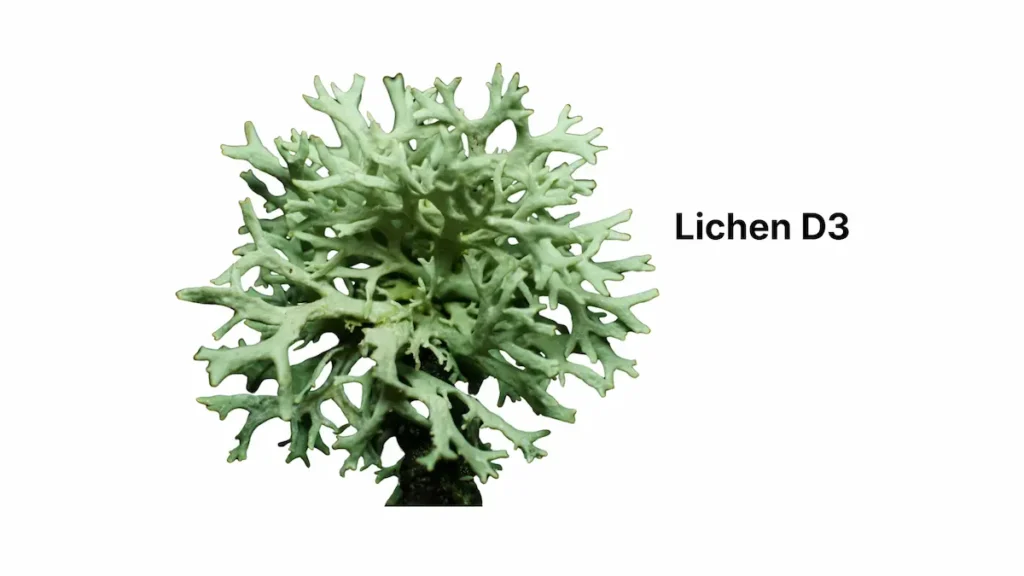
2 — Lichen is the only meaningful non-animal source of true D3. Lichen produces the same precursor found in human skin and, on exposure to ultraviolet light, converts it to cholecalciferol — the same molecule human skin makes. Sources state that lichen-derived D3 is chemically identical to the lanolin-derived form, and comparisons of the two report equivalent bioavailability. For anyone avoiding animal derivatives, this helps.
3 — Dairy is a modest contributor, and only where fortified. With dairy included, fortified milk and yoghurt contribute meaningfully in countries that fortify. Unfortified dairy contributes very little. The label is the arbiter, since fortification practice varies by country and the form used may be D2 or D3.
4 — Sun is the only unfortified, unsupplemented route, and it is seasonal. For a substantial part of the year at northern latitudes it is unavailable regardless of behaviour.
5 — The plant-based consideration. For a plant-based or vegetarian adult in a northern climate, supplemental D3 through the winter may be a consideration.
| Source | Form | Practical contribution (plant-based/vegetarian) |
| Sunlight on skin | D3 | Substantial through the summer months at northern latitudes; effectively nil through winter |
| Lichen extract | D3 | The primary supplemental route; equivalent to the lanolin-derived form |
| UV-exposed mushrooms | D2 | Modest and real, but the less efficient form |
| Fortified plant milks | D2 or D3 | Varies considerably by brand — the label specifies form and amount, not the same as whole-food plant-based source supplements |
| Fortified dairy | D2 or D3 | Modest, where fortification exists |
| Fortified cereals and spreads | Usually D2 | Small contributions that accumulate, but are added |
Key points: vitamin K2 on a plant-based diet
6 — Natto is in a category of its own. Fermented soybeans produced with Bacillus subtilis are, by a wide margin, the richest known food source of MK-7. Sources state that a modest portion supplies an amount comparable to that used in supplementation research.
7 — Dairy contributes where it is genuinely fermented and aged. Certain aged and mould-ripened cheeses contain longer-chain forms, and some fermented dairy contains MK-4. For a vegetarian including dairy, this represents a real, if modest, contribution.
8 — K1 is not a substitute, but it is not irrelevant. Leafy greens supply abundant vitamin K1, and it is observed that humans convert a limited amount of K1 into a K2 form in some tissues. Conversion is limited and insufficient to meet K2-specific needs, but a high-green diet remains a genuine foundation.
9 — The microbiome is a contributor open to influence. As covered in Section 7, a diverse high-fibre whole-food plant diet supports the bacterial populations that produce long-chain menaquinones. This is the one vitamin K2 input that responds directly to daily dietary pattern.
13. Whole-Food-Derived vs Synthetic and Isolated Forms
For vitamin D3, whether lichen, lanolin, or laboratory—the differences lie in the delivery medium and manufacturing quality. For vitamin K2, source genuinely matters, because fermentation-derived MK-7 delivers the biologically active form while some synthetic routes do not.
Vitamin D3: different mediums
- The delivery medium. D3 suspended in a fat carrier — extra virgin olive oil, MCT, coconut oil — is observed to be better absorbed than D3 pressed into a dry tablet with no fat content.
- Cofactor context. A whole-food-derived or food-matrix product may carry accompanying compounds that an isolate does not.
- Manufacturing integrity. This is where the real risk sits, and it is not theoretical. Sources document cases of vitamin D intoxication traced to manufacturing and labelling errors, in which products contained vastly more than the stated amount.
The Considerations
- Is it the correct molecule? (D3 rather than D2; all-trans MK-7)
- Is it in a form the gut can absorb? (a fat-based carrier)
- Is the stated amount the actual amount? (independent verification)
- Is it displacing food? Supplements sit alongside a diet rich in greens, fermented foods and diverse fibre. They do not replace one.
14. Why Vitamin D3 With Healthy Fat
D3 and K2 are both fat-soluble, and the body requires bile and dietary fat to carry them across the intestinal wall. Taking them with the largest fat-containing meal of the day is observed to meaningfully increase absorption.
What “healthy fat” means practically. A high-fat meal is not required. Sources suggest a modest amount of fat within a meal is sufficient. On a plant-based diet, that is comfortably met by:
- Extra virgin olive oil on a salad or over vegetables
- A small handful of walnuts, almonds or Brazil nuts
- Avocado
- Tahini, or nut butter on toast
- Ground flaxseed or hemp seeds stirred into a meal
- Coconut milk in a curry or dal
Two practical corollaries:
- Taking D3 with black coffee, on waking, or alongside a low-fat breakfast is among the most common reasons a supplement may underperform.
- For anyone taking fat-blocking medication, or living with a fat-malabsorption condition, absorption of both D3 and K2 may be impaired. This warrants clinician input rather than a self-directed increase.
15. Is There a Better Time to Take Vitamin D3 K2
The largest healthy fat-containing meal is the answer; sources support. Whether that meal falls in the morning or the evening, consistency matters more.
Taking a holistic view, several considerations converge.
The absorption requirement (strong): Taking it with the largest healthy fat-containing meal. This is the one recommendation with direct supporting evidence.
The physiological-rhythm view (reasonable). Natural synthesis in the skin is a midday phenomenon. Taking D3 with a midday or early-afternoon meal loosely mirrors that pattern. This is a holistically coherent observation rather than a research-informed one.
Daily versus infrequent intake. Daily intake is observed to produce steadier status and, as noted in Section 2, narrows any difference between the D2 and D3 forms.
Around training. These are status nutrients operating over weeks and months, not session-level performance aids. Attaching them to a habitual meal is perhaps the priority, as suggested in the references.
16. Choosing the Best Vitamin D3 K2 Supplement
The best vitamin D3 K2 supplement is the one supplying cholecalciferol D3 and, where possible, all-trans MK-7 in a healthy fat carrier, independently tested, at a level matched to an individual’s own blood test rather than to a marketing figure.
Considering Levels, rather than isolated fixed numbers, as part of a whole picture.
Because appropriate intake depends on the individual, the guidance is best directional rather than solely focused on meeting a numerical goal without individual context. Note the pattern running through the sports literature discussed in Section 9: benefit clusters around correcting insufficiency.
17. Reading the Label and Tracking Total Intake
Vitamin D may arrive from several places at once — a standalone supplement, a multivitamin, fortified foods, sometimes an omega-3 or bone-support formula. And excess may arise by accumulation:
Here are some examples of this potential accumulation:
- Standalone vitamin D3 or D3/K2 product
- Multivitamin — nearly all contain vitamin D
- Bone, joint or calcium formula
- Omega-3 or algal oil — some are fortified
- Greens powder or “foundation” blend
- Protein powder — some are fortified
- Fortified plant milks, cereals, spreads and yoghurts
- Any clinician-prescribed vitamin D
Totalled, these may reach a combined intake well beyond what any single product suggests, without a deliberate decision to take a high amount ever having been made.
Keeping a simple record. A note holding product name, form (D3 or D2; all-trans MK-7 or unspecified), amount per serving, start date, and blood test results with their dates makes it possible to connect a result to a decision at the next retest. Without it, the exercise becomes guesswork.
18. Recognising Potential Excess
Vitamin D excess is uncommon and generally requires very high intakes sustained over months, but it is serious. Therefore, sensible precautions should be considered, and professional advice tailored to individual health status is warranted. It becomes a real risk in three specific situations: sustained self-directed high intake without testing; product errors; and pre-existing conditions that disrupt normal vitamin D regulation.
19. Long-Term Use, Seasonal Cycling and the Role of Sun
Long-term supplementation is reasonable and often necessary at northern latitudes, but sources suggest it should be periodically re-evaluated with blood work and adjusted to the seasons, rather than held at one fixed level indefinitely.
The case for periodic reassessment
An intake is not a permanent setting. Requirement shifts with:
- Season — the dominant variable at higher latitudes
- Region — a relocation can change the picture entirely
- Body composition — losing or gaining significant fat mass changes how vitamin D distributes
- Training and lifestyle — a move from outdoor to indoor training changes exposure substantially
- Age — processing capacity may decline
- Gut health — chronic issues may affect levels
- New medications — several accelerate breakdown or block absorption
- Diet — a shift in diet may bring changes
A reasonable long-term rhythm: test at the end of winter, test at the end of summer, optimise a healthy diet and lifestyle in between.
Seasonal cycling
“Cycling” is frequently discussed in supplement contexts, often without a mechanism behind it. For vitamin D3 there is a version that makes genuine physiological sense: match intake to the season, because the body’s own production already varies enormously by season as outlined in seasonal vitamin D observations.
Sources recognise that vitamin D3 production in the skin reaches a natural limit, beyond which further exposure adds burn risk rather than vitamin D3. Individual suitability and personal precautions take precedence over any general information presented here.
| Period (northern hemisphere, higher latitudes) | The body’s own production | Typical approach |
| Deep winter months | Effectively nil | Peak supplemental need; this is the period that matters |
| Shoulder months, spring and autumn | Partial, and weather-dependent | Transitional; a reduced level may be considered based on guidance |
| Summer months | Substantial, with regular midday exposure | Reduced intake or, with genuinely good exposure based on guidance |
This is not arbitrary cycling — it aligns intake with a natural annual rhythm that human physiology already follows.
20. Precautions and The Scope of this guide
Several conditions and medications make vitamin D3 or K2 supplementation genuinely inadvisable without consulting a healthcare professional.
Everything in this guide is educational. It is designed to support a better-informed conversation with a qualified professional — not to substitute for medical advice.
Readers are advised to consult a suitably qualified healthcare professional. All information presented is subject to individual suitability and individual health status. The references and research papers noted and drawn upon for this article are listed below.
No affiliation or endorsement. All sources cited are independent of Go Deeper Health; their inclusion is for citation purposes only and implies no endorsement, sponsorship or affiliation in either direction. No specific brand, supplement or supplier is endorsed.
21. Frequently Asked Questions
Is vitamin K2 necessary alongside vitamin D3?
It is not mandatory, but sources recognise the pairing as mechanistically well justified. Vitamin D3 increases calcium absorption and increases production of osteocalcin; vitamin K2 is a supportive cofactor.
Is vitamin D3 vegan?
Conventional D3 is derived from lanolin, a sheep wool product, so it is not. Lichen-derived D3 is vegan, chemically identical to the lanolin-derived form, and reported to have equivalent bioavailability. The label should specify “lichen-derived” or “vegan D3” — “vegetarian” alone does not confirm it.
Can enough vitamin D3 be obtained from a plant-based diet?
Realistically, no — not from food alone, and not at northern latitudes through winter. Excluding eggs and fish, there is no meaningful whole-food plant source of D3; mushrooms supply D2, and fortified foods contribute modestly and inconsistently. Summer sun is the main non-supplemental source and is unavailable for a substantial part of the year at higher latitudes. For plant-based and vegetarian adults in northern climates, supplemental D3 through winter is close to a necessity.
What is the best time to take vitamin D3 K2?
With the largest fat-containing meal. Absorption depends on bile and dietary fat, and clinical observation reports a substantial improvement in achieved blood levels from this change alone.
Is it possible to take too much vitamin D3?
Yes, though it is uncommon at ordinary levels. Excess operates through raised blood calcium and is generally observed only with very high intakes sustained over long periods, or where a product’s actual content differed from its label.
Does vitamin D3 K2 help athletic performance?
It supports the foundation rather than enhancing performance directly. Pooled research observes that over half of the athletes assessed had insufficient vitamin D status, including those training outdoors. Correcting a genuine deficiency supports muscle function, repair and bone integrity.
Summary: Ten Useful Points
- “Vitamin D” is a category, not a molecule. D3 (cholecalciferol) is the form sources support.
- D3 is observed to outperform D2 due to bioavailability.
- Synthesis starts with cholesterol — a precursor in the skin, activated by ultraviolet light, then processed by liver and kidney, with magnesium required along the way.
- Region and season may dominate. At northern latitudes, the winter months may not produce any vitamin D3 in the skin.
- Deficiency may present diffuse aches, disproportionate fatigue and weakness around the hips and shoulders — a pattern easily attributed to training load or age.
- K2 as a cofactor. D3 supplies calcium; K2 activates the proteins that route it into bone and away from arteries.
- Plant-based diets hold a real advantage in K2 through fibre-fed bacterial production.
- Both are best taken with a fat-containing meal — fat-soluble vitamins.
- Biomarkers Status. Vitamin D status alongside other biomarkers may offer a more detailed picture.
- More is not better past sufficiency. Check and discuss options with a healthcare professional.
Medical disclaimer. This article is provided for educational and informational purposes only. It does not constitute medical advice, diagnosis or treatment, and it is not a substitute for consultation with a qualified healthcare professional. Vitamin D and vitamin K supplementation can interact with medications and with existing medical conditions. Readers should seek the advice of a GP, a registered dietitian, or another suitably qualified healthcare provider before starting, stopping or changing any supplementation regimen, and should never disregard or delay seeking professional medical advice because of something read here.
References
- Khandelwal, A., Ahmed, K. A., & Dikshit, P. (2025). Vitamin D and Vitamin K: Synergistic Roles and Emerging Evidence for Combined Supplementation. Journal of Mid-Life Health, 16(4), 505. https://doi.org/10.4103/jmh.jmh_169_25
- D’Elia S, Bottino R, Carbone A, Formisano T, Orlandi M, Sperlongano S, Castaldo P, Molinari D, Palladino A, Morello M, Titolo G, Loffredo FS, Natale F, Cirillo P, Cimmino G. Modulation of Cardiometabolic Risk by Vitamin D and K2: Simple Supplementation or Real Drug? Uncovering the Pharmacological Properties. Int J Mol Sci. 2025 Dec 27;27(1):298. doi: 10.3390/ijms27010298. PMID: 41516172; PMCID: PMC12785717.
- Hasific S, Øvrehus KA, Hosbond S, Lambrechtsen J, Kumarathurai P, Mejldal A, Ravn EJ, Rasmussen LM, Gerke O, Mickley H, Diederichsen A. Effects of vitamins K2 and D3 supplementation in patients with severe coronary artery calcification: a study protocol for a randomised controlled trial. BMJ Open. 2023 Jul 14;13(7):e073233. doi: 10.1136/bmjopen-2023-073233. PMID: 37451735; PMCID: PMC10351276.
- Kuang X, Liu C, Guo X, Li K, Deng Q, Li D. The combination effect of vitamin K and vitamin D on human bone quality: a meta-analysis of randomized controlled trials. Food Funct. 2020 Apr 30;11(4):3280-3297. doi: 10.1039/c9fo03063h. PMID: 32219282.
- Alonso N, Meinitzer A, Fritz-Petrin E, Enko D, Herrmann M. Role of Vitamin K in Bone and Muscle Metabolism. Calcif Tissue Int. 2023 Feb;112(2):178-196. doi: 10.1007/s00223-022-00955-3. PMID: 35150288; PMCID: PMC9859868.
- Dzik, K. P., & Kaczor, J. J. (2019). Mechanisms of vitamin D on skeletal muscle function: Oxidative stress, energy metabolism and anabolic state. European Journal of Applied Physiology, 119(4), 825. https://doi.org/10.1007/s00421-019-04104-x
- Tripkovic L, Lambert H, Hart K, Smith CP, Bucca G, Penson S, Chope G, Hyppönen E, Berry J, Vieth R, Lanham-New S. Comparison of vitamin D2 and vitamin D3 supplementation in raising serum 25-hydroxyvitamin D status: a systematic review and meta-analysis. Am J Clin Nutr. 2012 Jun;95(6):1357-64. PMID: 22552031.
- Balachandar R, Pullakhandam R, Kulkarni B, Sachdev HS. Relative Efficacy of Vitamin D2 and Vitamin D3 in Improving Vitamin D Status: Systematic Review and Meta-Analysis. Nutrients. 2021;13(10):3328. PMCID: PMC8538717.
- Comparison of the Effect of Daily Vitamin D2 and Vitamin D3 Supplementation on Serum 25-Hydroxyvitamin D Concentration and Importance of Body Mass Index: A Systematic Review and Meta-Analysis. Advances in Nutrition. PMCID: PMC10831883.
- Chen TC, Chimeh F, Lu Z, Mathieu J, Person KS, Zhang A, Kohn N, Martinello S, Berkowitz R, Holick MF. Factors that Influence the Cutaneous Synthesis and Dietary Sources of Vitamin D. Arch Biochem Biophys. 2007;460(2):213-217. PMCID: PMC2698590.
- Webb AR, Kline L, Holick MF. Influence of season and latitude on the cutaneous synthesis of vitamin D3. J Clin Endocrinol Metab. 1988 Aug;67(2):373-8. PMID: 2839537.
- Wierzbicka A, Oczkowicz M. Sex differences in vitamin D metabolism, serum levels and action. Br J Nutr. 2022;128(11):2115-2130. doi: 10.1017/S0007114522000149. PMID: 35042577.
- Mulligan GB, Licata A. Taking vitamin D with the largest meal improves absorption and results in higher serum levels of 25-hydroxyvitamin D. J Bone Miner Res. 2010 Apr;25(4):928-30. doi: 10.1002/jbmr.67. PMID: 20200983.
- Marcinowska-Suchowierska E, Kupisz-Urbańska M, Łukaszkiewicz J, Płudowski P, Jones G. Vitamin D Toxicity – A Clinical Perspective. Front Endocrinol (Lausanne). 2018;9:550. PMCID: PMC6158375.
- Conly JM, Stein K. The contribution of vitamin K2 (menaquinones) produced by the intestinal microflora to human nutritional requirements for vitamin K. Am J Gastroenterol. 1994 Jun;89(6):915-23. PMID: 8198105.
- Ellis JL, Karl JP, Oliverio AM, Fu X, Soares JW, Wolfe BE, Hernandez CJ, Mason JB, Booth SL. Dietary vitamin K is remodeled by gut microbiota and influences community composition. Gut Microbes. 2021;13(1):1-16. PMCID: PMC7928036.
- Dahlberg S, Ede J, Schött U. Menaquinones, Bacteria, and Foods: Vitamin K2 in the Diet. IntechOpen.
- Owens DJ, Allison R, Close GL. Vitamin D and the Athlete: Current Perspectives and New Challenges. Sports Med. 2018;48(Suppl 1):3-16. See also: Muscle Regeneration and Function in Sports: A Focus on Vitamin D. PMCID: PMC8537590.
- Vitamin D Deficiency: What a Pain It Is. Mayo Clinic Proceedings.
- Comparative Study of Healthy Older and Younger Adults Shows They Have the Same Skin Concentration of Vitamin D3 Precursor, 7-Dehydrocholesterol, and Similar Response to UVR. PMCID: PMC11053405.