
Pumpkin Seed Protein: Is it a Complete Protein?
Pumpkin seed protein is a high-value plant-based protein option — it’s high in protein (in a whole-food-plant-based source), fairly easy to digest compared to other plant sources, and comes with complementary micronutrients like magnesium, zinc, and healthy fats.
But it’s not a “complete” protein on its own — it’s short on two amino acids (lysine and threonine) — building blocks the body needs in a complete supply. However, when eaten alongside foods like quinoa, beans, legumes, or sunflower seeds, which are rich in what pumpkin seeds are missing, they merge to create a complete protein.
Beyond the protein angle, the seed (and its oil) has some promising observations for muscle recovery, prostate health, and general antioxidant/anti-inflammatory support — though the research-based evidence for most of these is still developing, so it’s presented as “in terms of potential” rather than “conclusive.”
Overall: genuinely good, allergy-friendly plant protein, best used in combination with other foods rather than as a stand-alone protein source, based on individual suitability and health status.
Pumpkin Seed Protein: Nutritional Value
Pumpkin Seed Protein Powder (PSPP) is a concentrated plant protein made from ground pumpkin seeds — the flat, green-hulled kernels most commonly taken from oilseed pumpkins. This resource examines what the powder offers nutritionally, how its protein quality compares with other plant sources, and where the current research is strong, uncertain, or overstated.
The seed most commonly used is Cucurbita pepo var. styriaca (the Styrian, or hull-less, oilseed pumpkin) of the family Cucurbitaceae, known for its high oil and protein content.
What it is: A Seed-Based Protein Powder
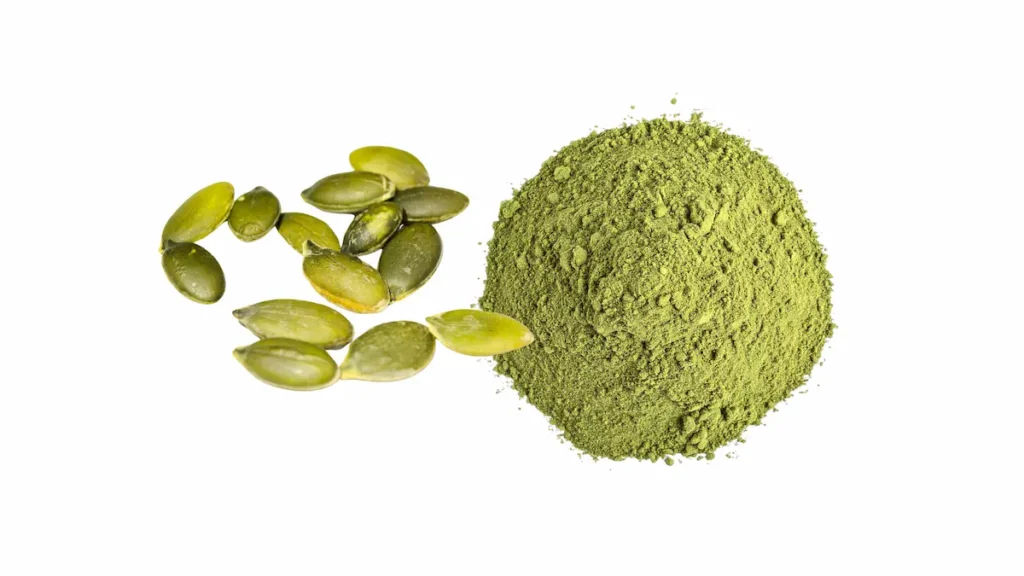
Pumpkin seed protein powder (PSPP) is made by processing natural, raw or dried pumpkin seeds into a fine powder, giving a seed-based protein rather than the more familiar dairy, soy, or pea proteins.
What This Guide Covers
The sections below work through its potential:
- Nutritional value — protein content, Protein Efficiency Ratio (PER), and Amino Acid Score (AAS).
- Types of PSPP — hydrolysed powder and home-activated (domestic) seed.
- Nutritional properties that relay potential therapeutic effects — including those of pumpkin seed oil.
- Case studies — muscle and prostate research.
- Holistic health perspective — how the seed fits within the Ayurvedic diet – dosha system.
Protein Category: A Crude Source of Protein
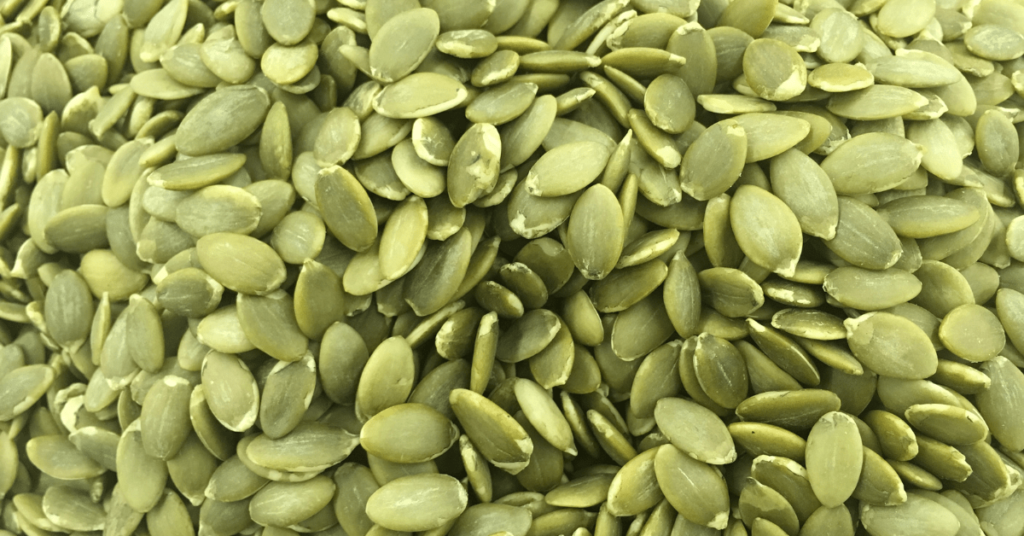
By plant standards, pumpkin seeds are a notably protein-dense food. Dotto and Chacha (2020) describe the seed as “high in crude protein, roughly 35%,” which in turn provides a broad spread of amino acids — though a wider review of the literature puts the range closer to 21–38% depending on variety and growing conditions (Sánchez-Velázquez et al., 2023). The nutritional value and bioactive compounds of whole pumpkin seeds are detailed in “How to Eat Pumpkin Seeds.“
Protein Type: Its Main Protein is Globulin
The dominant storage protein in pumpkin seeds is a globulin (cucurbitin), which accounts for most of the seed’s protein fraction.
- FoodData Central lists dried pumpkin and squash seed kernels at roughly 30 g of protein per 100 g.
Protein Efficiency Ratio (PER)
The Protein Efficiency Ratio (PER) is a measure of protein quality, based on weight gain in an in vivo setting relative to protein eaten — higher values generally indicate a more complete amino acid profile.
Two reference points are worth keeping separate here: the classic casein bioassay standard sits at around 2.5, while the PER figures Sánchez-Velázquez et al. (2023) calculated specifically for pumpkin seed are amino-acid-profile-based estimates that vary widely — from as low as 0.32 up to roughly 5, depending on the equation and seed variety used. That spread means “good protein” is a fair average characterisation, but not a fixed property of every batch.
The same study compared pumpkin seed with its “milpa triad” companions — corn and common beans, traditionally grown together in Mesoamerican polyculture. Limiting amino acids differ by seed: lysine and tryptophan in corn, the sulphur amino acids cysteine and methionine in common beans, and lysine and threonine in pumpkin seeds.
The authors suggest that consuming a combination of milpa triad seeds could complement each other’s individual amino acid shortfalls — though the study itself notes this specific combined effect hasn’t yet been directly tested; it’s a reasonable inference from the individual profiles, not a demonstrated outcome of eating them together.
“Milpa” refers to an ancient Mesoamerican farming method where maize (corn), beans, and squash are planted closely together in the same plot of land. Eating these three together is thought to help build a fuller amino acid profile than any one of them supplies alone, since each tends to be limited in different amino acids the others provide.
On this basis, pumpkin seed protein is reasonably described as a good protein by PER, on average — though the exact value varies considerably with the seed’s amino acid profile, so it isn’t uniformly high across every source. The seed also provides several essential amino acids, along with fibre, unsaturated fats, and minerals such as magnesium and zinc.
Amino Acid Score
The Amino Acid Score (AAS) rates protein quality for human requirements. A score of 1.0 (100%) means the protein supplies enough of every essential amino acid; a lower score signals a shortfall in one or more. Below are key findings taken from Sánchez-Velázquez and others (2023).
- Across the pumpkin seed samples studied, the amino acid score ranged widely — from about 32% to 160% — meaning quality depends heavily on variety and processing.
- Some varieties comfortably exceed the requirement for certain amino acids, while others fall short.
- The score reflects the single most limiting amino acid, so a low figure does not mean the protein is without value.
- In practice, combining pumpkin seed protein with complementary foods offsets its limiting amino acids (see below).
Taken together, the Protein Efficiency Ratio and Amino Acid Score data position pumpkin seeds as a good — though not complete — plant protein.
Pairing them with foods such as quinoa or legumes rounds out the amino acid profile, moving it toward a complete protein; this also depends on the source, type, and quantity consumed in a given meal.
Soaking pumpkin seeds for several hours or overnight, then roasting, may reduce phytic acid, which otherwise binds minerals and may limit their absorption during digestion.
Types of Pumpkin Seed Protein Powder
A 2025 review by Xie and others describes pumpkin seed protein as an underused but promising plant protein for food applications, citing its essential amino acid profile and functional properties — solubility, gelling, and emulsification — that support its use in powders and supplements.
Hydrolysed Pumpkin Seed Protein Powder
Peptides are short chains of amino acids that make up proteins. Hydrolysed powder has been pre-digested — large protein chains broken down into smaller peptides and free amino acids using water or enzymes — and differs from ordinary ground seed in that it’s typically easier to digest and absorb, and may offer a higher protein concentration per serving.
Below are selected points from Mazloomi-Kiyapey and others (2019), in which they set out to produce antioxidant peptides from hydrolysed pumpkin seed protein, they found:
- Essential amino acids made up close to 40% of the total amino acid content of the hydrolysates. The hydrolysed powder showed higher levels of several essential amino acids than the non-hydrolysed powder.
- The essential amino acids higher in the hydrolysed pumpkin seed powder were threonine, methionine, valine, leucine, isoleucine, and phenylalanine.
- Those present in lower amounts were tyrosine, histidine, and lysine.
Home-Activated (Domestic) Pumpkin Seed Protein Powder
Homemade pumpkin seed protein powder benefits from “activating” the seeds — soaking them in water before grinding, drying as preferred, and then using them as part of a balanced nutritional intake. Soaking helps reduce anti-nutrients such as phytic acid, which can otherwise bind minerals like zinc and iron and lower their absorption. The same pre-treatment is used for other plant proteins, such as legumes.
- To activate pumpkin seeds for digestion, soak them in water for several hours or overnight, then dry and/or grind them into a powder, or add them directly to foods.
- Once activated, the powder can be added to shakes, smoothies, meals, or energy bars.
- The protein concentration may vary depending on the seed quality and the grinding process.
Complete Protein Combinations: Pairing Pumpkin Seeds With Other Foods
Because no single seed is a complete protein, pairing pumpkin seeds with complementary foods builds a fuller amino acid profile suited to a personalised approach.
Combining pumpkin seeds with quinoa, sunflower seeds, hemp, flax, beans, or lentils can build a complete essential amino acid profile across a meal, all nine essential amino acids.
Sunflower seeds are rich in the sulphur amino acids methionine and cysteine, which are limited in pumpkin seeds, making the two a natural pairing.
Quinoa is rich in lysine, which is limiting in pumpkin seeds.
Types of beans supply the sulphur amino acids cysteine and methionine.
In whole-food, plant-based eating, variety is a key factor.
Nutritional Value Translates to Dietary Therapeutic Effects
Pumpkin seed oil has a long history of traditional (phytotherapeutic) use.
Seeds are a useful source of plant protein for muscle support. They are rich in bioactive compounds studied for anti-inflammatory, antioxidant, and blood-sugar-supporting effects — areas where research is promising but still developing.
Morrison et al. (2015) found that replacing saturated fat with PUFA-rich pumpkin seed oil reduced markers of non-alcoholic fatty liver disease and atherosclerosis progression in an in vivo model, supporting this line of evidence. Additionally, pumpkin seeds are also linked with cognitive health, largely through their vitamin E and mineral content.
Case Study: Muscle Support
In a review article “The Potential of Pumpkin Seeds as a Functional Food Ingredient,“ Dotto and Chacha note the following:
- The globulin structure of pumpkin seed protein is similar to that of legumes.
- As a plant protein, it can contribute to muscle growth and maintenance.
- Its amino acids provide the raw material for muscle protein synthesis.
- Antioxidant and anti-inflammatory compounds may help limit exercise-induced muscle damage and support recovery.
- Overall, current evidence suggests pumpkin seeds may support muscle health.
Case Study: Prostate Health
Furthermore, a single-blind randomised trial by Zerafatjou and others (2021) examined whether pumpkin seed oil could ease the symptoms of benign prostatic hyperplasia (BPH), an age-related enlargement of the prostate.
- It compared pumpkin seed oil with tamsulosin, a standard BPH medication. The oil group reported no side effects, while the tamsulosin group experienced some (dizziness, headache, and others).
- The dose was 360 mg of pumpkin seed oil twice daily for three months, in a trial of around 73 men aged 50 and over.
- Participants reported improved symptoms, though tamsulosin worked faster in the short term.
This is a small, single trial, so the findings are indicative rather than conclusive and are limited in nature. Pumpkin seed oil sits alongside, not in place of, established medical options.
Beta-Sitosterol in Pumpkin Seed
The compound in pumpkin seed most often credited for these effects is beta-sitosterol.
- Beta-sitosterol is a plant sterol with anti-inflammatory activity that has been studied in relation to prostate enlargement.
- Pumpkin seed oil is a comparatively rich source of it (Chen, 2021, in vivo study).
- Its concentration varies with the pumpkin variety and the oil-extraction method.
The Seed: Why Organic Produce from a Holistic View
Organic cultivation avoids synthetic chemicals, pesticides and fertilisers, reducing chemical residues in the seed and easing the load on the surrounding environment. Holistically, organic sources are part of the nutritional profile, not independent of it, as long-term nutritional quality is equally important.
Ayurvedic Perspective on Pumpkin Seed
Ayurveda regards pumpkin seeds and their oil as nourishing, largely due to their protein and healthy fat content.
They are traditionally seen as vata- and pitta-balancing, but tend to increase kapha unless roasted.
Kapha-dominant individuals may prefer them roasted, which is thought to make the oil content easier to digest.
Summary and Key Takeaways
Pumpkin seeds are a nutrient-dense food rich in plant-based protein and bioactive compounds. Their phytochemical profile has been linked to muscle recovery, prostate and urinary support, antioxidant and anti-inflammatory activity, and cognitive health—areas where evidence ranges from well-established to still emerging.
- The Protein Efficiency Ratio (PER) and Amino Acid Score (AAS) give a useful picture of the seed’s protein quality.
- Despite variability in its amino acid profile, the evidence supports it as a good plant protein.
- Published studies support both its protein value and its broader dietary benefits.
- As one of the “milpa triad” seeds, it pairs well with quinoa or beans to help complete its limiting amino acids. Beyond that, in plant-based diets, it pairs well with other sources.
- Ayurveda adds a complementary lens through the dosha system, traditionally treating the seed as a brain tonic linked to Vitamin E and other essential components.
- The two main forms — hydrolysed and home-activated (domestic) — differ in digestibility and bioavailability.
- For most people — whether athletes or those seeking a plant protein — it can be a worthwhile addition to the diet, subject to individual suitability.
Precautions and Individual Suitability:
The information presented in this guide is subject to individual suitability and individual health status. This is an informational post only and does not constitute professional or medical advice.
Frequently Asked Questions
Not on its own — it is low in lysine and threonine — but it is a good plant protein that becomes “complete” when paired with foods such as quinoa or beans.
Organic seeds carry fewer pesticide and fertiliser residues, which can matter for regularly consumed food.
Yes. Grind raw, soaked, or roasted seeds into a fine powder.
Whole dried pumpkin seed kernels contain roughly 30g of protein per 100g (FoodData Central). Commercial protein powders concentrate this further, though the exact figure varies by brand and processing method.
Lysine and threonine are the amino acids pumpkin seed protein is most short on. Pairing it with lysine-rich foods like quinoa or legumes helps offset this.
References and Sources
References
- Dotto, J. M., & Chacha, J. S. (2020). The potential of pumpkin seeds as a functional food ingredient: A review. Scientific African, 10, e00575. Available online.
- Easy Ayurveda. Pumpkin (Kushmanda): Uses, remedies, research, side effects. easyayurveda.com
- Sánchez-Velázquez, O. A., Luna-Vital, D. A., Morales-Hernandez, N., Contreras, J., Villaseñor-Tapia, E. C., Fragoso-Medina, J. A., & Mojica, L. (2023). Nutritional, bioactive components and health properties of the milpa triad system seeds (corn, common bean and pumpkin). Frontiers in Nutrition, 10. https://doi.org/10.3389/fnut.2023.1169675
- Zerafatjou, N., Amirzargar, M., Biglarkhani, M., Shobeirian, F., & Zoghi, G. (2021). Pumpkin seed oil (Cucurbita pepo) versus tamsulosin for benign prostatic hyperplasia symptom relief: A single-blind randomized clinical trial. BMC Urology, 21. https://doi.org/10.1186/s12894-021-00910-8
- Mazloomi-Kiyapey, S. N., Sadeghi-Mahoonak, A., Ranjbar-Nedamani, E., & Nourmohammadi, E. (2019). Production of antioxidant peptides through hydrolysis of medicinal pumpkin seed protein using pepsin enzyme and the evaluation of their functional and nutritional properties. ARYA Atherosclerosis, 15(5), 218-227.
- Xie, Y., Wang, Y., Jin, X., Zhang, X., & Yang, R. (2025). Pumpkin Seed Proteins: The Potentially Alternative Protein Supplements for Food Applications. Foods, 14(22), 3969. https://doi.org/10.3390/foods14223969
- Chen, Y., et al. (2021). Beta-sitosterol in pumpkin seed oil: composition and bioactivity. [in vivo study]. Read the study.
- Morrison, M. C., Mulder, P., Stavro, P. M., Suárez, M., Arola-Arnal, A., Kooistra, T., Wielinga, P. Y., & Kleemann, R. (2015). Replacement of Dietary Saturated Fat by PUFA-Rich Pumpkin Seed Oil Attenuates Non-Alcoholic Fatty Liver Disease and Atherosclerosis Development, with Additional Health Effects of Virgin over Refined Oil. PLoS ONE, 10(9). https://doi.org/10.1371/journal.pone.0139196